SECCION Crisis monetaria: US/EURO, dolar vs otras monedas

Gráfico del tipo de cambio del Dólar Americano al Euro - Desde dic 1, 2008 a dic 31, 2008

Evolucion del dolar contra el euro

US Dollar to Euro Exchange Rate Graph - Jan 7, 2004 to Jan 5, 2009

V. SECCION: M. PRIMAS

1. SECCION:materias primas en linea:precios


[Most Recent Quotes from www.kitco.com]


METALES A 30 DIAS click sobre la imagen
(click sur l´image)

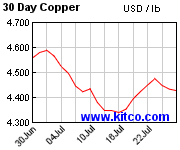
3. PRIX DU CUIVRE

  Cobre a 30 d [Most Recent Quotes from www.kitco.com]

4. ARGENT/SILVER/PLATA

5. GOLD/OR/ORO

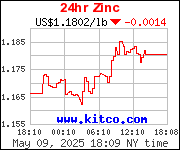
6. precio zinc

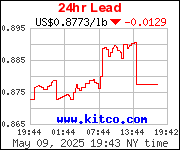
7. prix du plomb

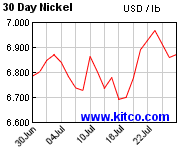
8. nickel price

10. PRIX essence


petrole on line

Find out how to invest in energy stocks at EnergyAndCapital.com.

azucar

azucar
mercados,materias primas,azucar,precios y graficos azucar i otros

21 jun 2011

The Catalysts Start to Catalyze


The Catalysts Start to Catalyze

by John Rubino on June 15, 2011
For a couple of years now it's been clear that the world was about to fall apart, with the only question being which local failure turns out to be the catalyst for a systemic breakdown. So many things were on the verge of blowing up…yet none of them did. The world's governments have engaged in a heroic period of "extend and pretend" that has kept the system together longer than seemed possible.
But now the game seems to be ending. It's still not clear which bomb will go off first, but a bunch of fuses have gotten very short indeed. Here's a survey of old crises that are finally coming to a head:
California and Illinois
These two U.S. states are bankrupt by any reasonable definition, but are somehow managing to pay most of their bills. Their political classes are dominated by public sector unions, so neither has tried the tough medicine of places like Wisconsin or New Jersey. Instead, they've used a combination of much higher taxes (Illinois) and accounting gimmicks as a means to much higher taxes (California) to delay the inevitable reckoning.
Both are reaping what they've sown. Illinois, after raising corporate and income taxes, now faces an exodus of businesses to more friendly climes like Indiana and Texas. The governor is doling out tax breaks to keep major employers, a practice that 1) sends those new taxes right back out the door and 2) leads every other company to demand the same treatment. Latest on the list is the Chicago Mercantile Exchange, the state's biggest financial institution. No end in sight but bankruptcy.
California desperately wants to raise taxes but can't get an increase through the legislature. Thanks to a recently passed referendum, lawmakers don't get paid unless they produce a budget, so they'll do so pretty soon. But without more tax revenues it will fill the gaping deficit with gimmicks like delayed payments. No one will be fooled. The only question now is whether there's room in Texas for all the California companies that will soon be leaving. Again, no end in sight but bankruptcy. Short munis and pretty much anything dependent on consumer spending, since the resulting public sector layoffs will devastate demand for cars and other luxuries.
The Middle East
As country after country blows up, the U.S. finds itself sucked into increasing numbers of "humanitarian" military operations that are, of course, really about protecting the flow of oil. It won't work. An oil crisis of some sort is coming. Buy energy stocks, from oil to clean tech, short everything else.
The U.S. budget
With America borrowing, in effect, its entire military budget from China, unemployment headed back to double digits even by Washington's fraudulent accounting, and neither party willing to really address the military/entitlements complex, the debt will keep piling up until it can't. The rating agencies are now, belatedly, threatening the US AAA rating, the loss of which would either drive interest rates back to their historical average of 5%-6% (sending interest costs out of control) or force the Fed to start buying all the bonds issued by Treasury (sending the money supply out of control). Result: imminent currency crisis. Buy gold and silver, short Treasuries.
Housing
After seeming to stabilize for a few months, housing is tanking again. Sales and prices are down, underwater mortgages are surging, home builder confidence is at new lows, and poor innocent Bank of America is stuck with trillions of bad paper that it's not accounting for. As home prices accelerate to the downside, look for huge bank write-downs, massive stock volatility, and maybe another bailout. Short anything in the financial sector.
Europe
Ah, the euro. Greece is imploding…riots in the street, the government is falling, and the Bundesbank and ECB can't agree on how to handle the coming default. This one is coming to a head very soon, to be followed by the other PIIGS countries — assuming there's still a Eurozone to try to save. Short the European banks with the most Greek paper, load up on precious metals.
Does it matter which blows up first?
Not any more. They're all so close that just their prospect is enough to send capital running for cover. It's a nasty year no matter what. But then comes the next stimulus plan, which complicates the whole "short the world" thesis. The markets have been consistently fooled by this kind of thing, and there's no reason to believe that QE3 won't ignite another rally in risk assets. So monitor those shorts and be ready to close them out when CNBC starts hinting at a big pending announcement from Bernanke or Geithner. Shift the proceeds into precious metals, which will absolutely rocket when the next wave of fake liquidity hits the market.
__._,_.___

__,_._,___

mining tax

More mining tax, royalty hikes 'inevitable' – Control Risks

TORONTO (miningweekly.com) – More governments in Africa and elsewhere, especially newly elected ones, will likely look at raising mining taxes and royalties amid historically high commodity prices, Control Risks senior analyst for Africa Thomas Wilson said in an interview.
"I think it's inevitable. And it's always been like that, it's always followed the mineral cycle, he said on the sidelines of a MineAfrica seminar in Toronto.
"Governments look at commodity prices and say 'we should be getting more out of this'."
The trend is also a product of the changes in governments, particularly when more democratic regimes replace what may have been "more autocratic" previous governments, he said.
"So they come in on a popular mandate where they have made the electorate promises to look at contracts that were signed in the past with other governments that were potentially, I suppose, less scrupulous when it came to negotiating with foreign investors."
Mining companies and investors are increasingly edgy about potential changes in government policy in the regions where they operate, as nations seek ways to benefit more from record commodity prices.
A trend towards resource nationalism around the world is probably the biggest risk facing mining companies, Xstrata CEO Mick Davis said in December.
Last year, then-Australian Prime Minister Kevin Rudd proposed a 40% resources super profits tax, and although the country backed off the plan it has now released draft laws for a 30% tax on coal and iron ore miners.
Also this week, reports emerged that the Tanzanian government is planning a windfall tax on the mining industry, sending shares in LSE-listed African Barrick Gold lower.
And Mining companies operating in Peru also declined sharply on Monday after left-leaning Ollanta Humala, a military officer who had talked about making sure Peruvians benefit more from the country's mineral wealth, was elected President.
Guinea, under new President Alpha Conde, has also said it will relook at the country's mining code, followed by a review of all existing mining contracts.
Reviews of outdated laws and a push by governments to be more active in their resources sectors are not necessarily a bad thing, Wilson commented.
"But they must resist the temptation to turn reviews of laws and contracts into a purely revenue generating exercise."
DEALS TO SURVIVE
Mining companies operating in higher-risk areas are also not helping themselves or their shareholders by squeezing all possible concessions out of governments when negotiating mining contracts and agreements, Webber Wentzel partner Nkikia Moshesh said at the same event.
Agreements that seem skewed in the foreign investor's favour might look good on paper but run the risk of coming under fire from future governments and their voters, she commented.
Regimes change, commodity prices rise, "and people end up saying 'we are not extracting enough value from this company'," Moshesh said.
"Mining projects are intended to be of a long term nature. You want to conclude agreements that are going to survive, and preferably will survive changes in government, changes in political thinking."
ALMIGHTY STINK
African Barrick Gold, the biggest producer in Tanzania, and South Africa's AngloGold Ashanti both insisted this week that their tax positions in the country are protected by existing mineral development agreements, and could not be affected by a new windfall tax.
But there few new mines coming onstream in Tanzania and there is relatively little exploration investment as well, commented Africa mining consultant with political risk consultancy Menas Associates Christopher Melville.
"If the government is serious about the windfall tax it can have no other targets than the producing mines operated by the big players," he said.
Although the tax reports could just be "smoke and mirrors" related to internal party politics, it is also possible that the government is trying to use the threat of an imposed tax to persuade mining companies to renegotiate contracts voluntarily, Melville suggested.
"Trying to push it through...would cause an almighty stink with the majors given the stabilisation clauses in their development agreements.
"The government surely has no stomach for such a stink and may rather hope that unsettling announcements will be enough to encourage the companies to renegotiate voluntarily."
Either way, this week's reports are clearly negative for investor interest in Tanzania, he said.
"The government cannot afford to kill the goose."
Edited by: Creamer Media Reporter

__._,_.___
.

__,_._,___

14 jun 2011

Fwd: Macroperu China: idea de moratoria de EEUU es "jugar con fuego" 18:41 El resultado de una


China: idea de moratoria de EEUU es "jugar con fuego"

18:41 El resultado de una medida de ese tipo contra nuestro país será muy serio, advirtió un funcionario chino.
SINGAPUR, jun 8 (Reuters) – Los legisladores republicanos de Estados Unidos están "jugando con fuego" al contemplar incluso un breve incumplimiento del pago de deuda para obligar a recortes más profundos en el gasto fiscal, dijo el miércoles un asesor del banco central chino.
La idea de una cesación de pagos técnica -en lo esencial, postergar pagos de intereses por pocos días- ha ganado el respaldo de un creciente número de republicanos, que lo ven como un precio que valdría la pena si con eso logran que la Casa Blanca acepte profundos recortes al gasto, reportó el martes Reuters.
Pero cualquier forma de "default" podría desestabilizar a la economía global y enturbiar las ya tensas relaciones con los grandes acreedores estadounidenses, como China, advirtieron funcionarios de Gobierno e inversionistas.
Li Daokui, asesor del Banco Popular de China, dijo que una cesación de pagos podría socavar al dólar y Pekín debía disuadir a Washington de no continuar con este curso de acción. "Creo que existe el riesgo de que la moratoria de deuda estadounidense pueda ocurrir", dijo Li a reporteros en el marco de un foro en Pekín. "El resultado será muy serio y realmente espero que paren de jugar con fuego", agregó.
China es el mayor acreedor externo de Estados Unidos, ya que poseía más de 1 billón de dólares en deuda del Tesoro a marzo, según datos estadounidenses, por lo que sus preocupaciones tienen un peso considerable en Washington. "Realmente estoy preocupado por los riesgos de una moratoria en el pago de la deuda estadounidense, lo que pienso podría llevar a una caída en el valor del dólar", agregó Li.
El Congreso de Estados Unidos ha sido reacio a aumentar el límite de gasto del Gobierno, mientras los legisladores discuten cómo controlar el déficit que se proyecta que alcance los 1.4 billones de dólares este año fiscal. El Departamento del Tesoro de Estados Unidos ha dicho que se quedará sin espacio para pedir préstamos el 2 de agosto.
Si Washington no puede pagar los intereses de su deuda, el Gobierno de Barack Obama ha advertido de consecuencias "catastróficas" que podrían llevar a la débil economía de regreso a la recesión.
"Esto tiene implicaciones nefastas para la economía en un momento en que los datos macro están debilitándose", dijo Ben Westmore, un economista de materias primas en el National Australia Bank. "Es simplemente una idea horrible", declaró.
Los mercados financieros han seguido de cerca el debate en Estados Unidos, pero estiman que es bajo el riesgo de una moratoria.
REUTERS – 08/06/11

18 may 2011

Los 13 paises que controlan el oro en el mundo

El Peru tiene 36 TM de oro como reservas.1540 millones de dolares. Venezuela 365 TM

The 13 Countries That Control the World's Gold

Even if 2011 has gotten off to a rough start for gold, everyone knows that the value of gold is at historic highs.  What is interesting is that there is rarely a discussion about which countries actually have a lock on the world's gold.  24/7 Wall St has compiled a list of the top 13 nations which hold the bulk of the world's gold reserves and added in an outlook for 2011.
After having peaked above $1,420 per ounce at the end of 2010, gold has recently traded under $1,330 per ounce and has basically put in 3-month lows.  As part of its analysis 24/7 Wall St.  looked at the trends of the world's top holders that may drive demand up or down ahead in 2011 after taking a look at the new data from the World Gold Council.
Many issues should be considered in gold investing including demand from the private sector for bars, coins and jewelry along with industrial use.
1) United States holds 8,133.5 tonnes.
What the U.S. holdings will be when the next report comes out in another 7 weeks or so  is uncertain.  There will have been more than $600 billion in new commitments for Quantitative Easing by the Federal Reserve in the last few months. The US debt ceiling has been an ongoing issue.  The U.S. could always try unloading some gold to depress rising commodity prices rather than to increase the deficit, but unfortunately that would only last a few months.  If it did sell some of the shiny gold metal, Uncle Sam would have to find huge amounts of gold later. Besides, it is arguable whether countries are any good at price intervention. The lackluster economic recovery may result in little change in the gold holdings of Uncle Sam in 2011.
2) Germany holds 3,401.8 tonnes.
Germany is the foundation of the European Union and the Euro.  The Germans were sellers of gold for coins under the Central Bank Gold Agreements (The third Central Bank Gold Agreement currently in force covers the gold sales of the Eurosystem central banks, Sweden and Switzerland) from at least 2003 to 2008, but the sales were not enough to put a serious dent in its supply of gold.  Under the current state of the E.U., it's hard to see Germany becoming a huge buyer of the shiny metal.   A sale might cause investors to panic and cause the euro to collapse.  Unlikely, but a theory.   The funds to bail out troubled European countries, however, have to come from somewhere.  If Germany does sell gold reserves then it seems unlikely to be substantial enough that its #2 position would be up for challenge.
3) Italy holds 2,451.8 tonnes.
Italy was in the Central Bank Gold Agreements .  On the surface, it seems that the Italians are unlikely to sell off their gold reserves even if they are the least discussed nation among the PIIGS.  Releasing gold might address some of Italy's budget gaps, but the country faces many serious economic problems.  If we had to guess about reserves, we'd expect to see a slow or small drop but not enough to make much difference.


4) France holds 2,435.4 tonnes.
The French are the French and predicting what will happen with France's gold reserves is difficult at best.  Someone has to bail out the PIIGS, and France is the second part of the foundation of the European Union and the Euro currency.  France is part of the Central Bank Gold Agreement that had led to selling, but this was all before the major run-up in gold.  The logic would seem to hold that more light selling would be expected.
5) China holds 1,054.1 tonnes… and probably now more.
China is adding to its gold reserves to the point that few question whether China's gold hoard will move higher.  With more than 1.3 billion people and a fast-growing economy, it seems that the only thing that might impede gold buying is its own fight against inflation in 2011.  Some 454 tonnes of gold was bought between 2003 and  2009.  China probably added more than 200 tonnes during 2010 and "The World's Growth Engine" is likely to keep adding gold to assure the value of the yuan.
6) Switzerland holds 1,040.1 tonnes.
Imagining that the Swiss will buy more gold is hard after reports in recent years that it ran out of places to securely store it, even if those reports are debatable.  Then add in that Switzerland sold many tonnes of reserves under the time of the Central Bank Gold Agreement from 2003 to 2008, long before the great gold rush came upon us.   With a population of 7.6 million people, how much gold does the nation  need ?  Switzerland can still lighten its gold reserves and not be challenged over being one of the world's international banking center and as a benchmark currency.
7) Russia holds 784.1 tonnes… and more.
Russia is gobbling up gold as its economic power grows.  The report from the World Gold Council showed that it had accumulated some 120 tonnes in just the first 10 months of 2010 after adding more than 100 tonnes in 2009 and close to 70 tonnes in 2007.  More gold was purchased in November of 2010 after the data cut-off. The Russians also have huge oil and commodity reserves.  Unless gold suddenly plummets to unexpected lows to the point where it has embarrassing losses, then it is easy to assume that Russia will keep increasing its gold reserves.
8 ) Japan holds 765.2 tonnes.
Japanese people are known for keeping cash under their mattresses, but maybe they also stash gold. Japan has an inflated currency and it may decide to unload some gold holdings to be more competitive economically.  The risk is a rather simple one, and that is the same as elsewhere: central banks have historically not been great interventionists when it comes to commodity prices.  Prices for Japanese goods are now too expensive for foreigners due to the strength of the yen.
9) The Netherlands holds 612.5 tonnes.
It was surprising to see that the Dutch were one of the top ten in nations when it comes to gold reserves, even if it used to hold more gold.  You rarely hear of a "Dutch-led bailout for the PIIGS" but anything is possible in theory.  The nation was a seller of gold from at least 2003 to 2008 under the Central Bank Gold Agreement in Europe.   The country's gold holdings are unlikely to change much.
10) India holds 557.7 tonnes… and growing.
India is the second most populous country in the world with nearly 1.2 billion people.  Gold is such a part of the country's culture that it's impossible to think of India not accumulating more gold.  In fact, about one-third of the world's jewelry demand comes from there.
India acquired 200 tonnes of the IMF gold sales in late-2010 at prevailing market prices.  Some may have considered this a peak of the trend, but India is likely to continue acquiring gold under a normalized scenario for 2011 and perhaps for the years ahead.


11) Taiwan holds 423.6 tonnes.
It was rather surprising to see Taiwan as one of the world's largest gold holders.  Maybe it is for the nation's vast electronics business, or maybe it is to financially stay relevant in its long ongoing confrontation with China.  The nation is already considered wealthier per capita than many neighboring countries, but with the accumulation of gold made by China it almost seems unlikely to expect much major selling now from what was formerly known as Formosa.
12) Portugal holds 382.5 tonnes.
It was also surprising to see Portugal in the top fifteen holders of gold.  This must go back to the days of its empire building ambitions considering that its population is only just under 11 million people.  Or maybe it was that the nation was able to remain neutral in World War II.  If the PIIGS nation is in such dire straights, maybe its benefactors could consider taking pledges of some of its gold assets.  As Portugal has been a part of Central Bank Gold Agreement and a seller in recent years, it would seem likely that the country would unload more of its holdings.

13) Venezuela holds 365.8 tonnes.
If you ask politicians which nation is the most  least trusted in the Western Hemisphere, the answer is likely Venezuela.  Hugo Chavez has been no friend to America and the wealth coming to the country from its oil sales and from nationalization (some would say seizure) of businesses has only brought more wealth to the nation.  With its population of more than 27 million people, Venezuela is the sole Latin American country in the top fifteen gold holders of the world.
In 2010, Venezuela was listed by the World Gold Council as having been a buyer of 3.1 tonnes after buying 4.1 tonnes locally in 2009.  There is no reason to expect that to change.
Quasi Government and ETF Dominance
The International Monetary Fund holds some 2,846.7 tonnes, which would give it the ranking of No.3 in the world if it was a sovereign nation.  The IMF might see continued pressure on its gold reserves ahead, unless more gold is pledged to it by stronger nations to assist in `stabilization' bail-outs.  The IMF's Executive Board approved the sale of 403.3 tonnes in September 2009, which came to about one-eighth of its total gold holdings at the time. The work ahead for the PIIGS alone requires billions and billions of dollars, and the IMF has been involved there.
The European Central Bank holds 501.4 tonnes of gold and would rank No. 12 if it was ranked as a nation rather than a governing body over nations in a region.  What this amount will be when the IMF and data statistics unit reports at the next update is anyone's guess.  The European Union bailout funds have to come from somewhere other than IOU letters, but the source is up for debate.  E.U. member nations transferred in gold reserves and transferred in foreign reserve assets and the initial target for members was 15% of the total.  As at September 2010, the ECB held 26% of its reserves in gold.
The huge growth mechanism in the gold universe has been from the SDPR Gold Shares (NYSE: GLD) with its 1,260.84 tonnes as of this week, which is more fresh data.  You will see more of a "full gold ETF picture" later to make this more of an apples-to-gold comparison.  The "GLD," as it is called by investors  would be ranked above China and behind Italy in gold reserves if it were a central bank.  The value of its holdings is roughly $54.4 billion .
Most investors do not need an introduction to this exchange-traded product any longer other than the  reminder of just how large and just how dominant this is.  The most recent 2010-end data from the World Gold Council noted that the gold ETFs monitored in sum had net inflows of 361 tonnes during 2010 versus some 617 tonnes of net inflows in 2009.  The total holdings of ETF gold now hit a new high of 2,167.4 tonnes with a value of some $98 billion.  The "GLD" accounted for more than half of all tracked ETF products.  All in all, this is a staggering figure because this is the easiest of all gold holdings to track almost daily.
Elsewhere on the globe….
If you tally up the top fifteen central banks of the world (including ECB and IMF), the total is more than 25,500 tonnes. If you add the value of the exchange-traded products with more than 2,100 tonnes, then the total value of the top 15 central banks and quasi-governmental agencies comes to more than $1.15 trillion before personal gold holdings, industry holdings, jewelry holdings and more. The top 15 nations and entities still dominate the world of gold. Of the 113 countries and equivalents, the world's gold reserves come to 30,546.1 tonnes at the central bank level.
Perhaps the largest surprise was to see that the United Kingdom ranked #17 on the list of central banks by assets, preceded by Saudi Arabia and followed by Lebanon. To get a clear picture of the world's gold use and supply, we wanted to see other annual data as well.
We wanted to look at the industry and private holdings that are making an impact in gold as well.  What about markets and exchanges?  COMEX has shown that "the total non-commercial and non-reportable net long positions" that shows more speculative investment demand was high again in 2010.  The 2010-end data from the World Gold Council showed that the net-long position was roughly 26.3 million ounces or some 818.1 tonnes of gold.  The over-the-counter derivative market is of course very difficult to track, but it is believed to have positively added to the price of gold in 2010.
There has been a huge market for gold bars and gold coins, which is not shocking if you have watched any financial televsion promotional commercials in recent times.  The World Gold Council noted that physical delivery at the Shanghai Gold Exchange alone was 836.7 tonnes in 2010 and that 236.6 tonnes were delivered during the fourth quarter.  Investors in India are said to remain strong as well as elsewhere in Asia.  The figure from the U.S. Mint is that Americans bought roughly 1.2 million ounces, about 38 tonnes, worth of American Eagle bullion coins in 2010 after the 2009 figure of 1.4 million ounces or some 44.3 tonnes.
What about the world of jewelry, what "the rest of us" think of as the main use of gold?  The World Gold Council's recent year-end data is not complete for jewelry, but it showed that global jewelry demand was up 18% for the first nine-months of 2010 at some 1,468.2 tonnes at roughly $55.5 billion.  To show just how much India loves gold jewelry, its portion of 2010′s first nine months total was some 513.5 tonnes and that is more than one-third of the demand.
What about technology demand for gold?  The most recent data is also only for the first nine months of 2010, but that was said to be up 19% from 2009 to 221.8 tonnes.  That is close to the same level of 238.4 tonnes in 2008′s equivalent period.
And mine production and recycling?  The total gold supply from mine production, recycling, and from official sector transactions came to 2,993.3 tonnes in the first nine months of 2010.  Despite a gain in the first quarter of 2010, the World Gold Council said that this figure represented a drop lower by 3.1% versus the same period during 2009.  The belief is that gold from mining and recycling will have risen for 2010 and will reach levels seen at the start of the decade.
Calculating the real value of "above gound gold stocks" will vary from source and to source and it is almost impossible to value the hidden sums of gold that is unreported or that has been in family hands.  The World Council did put out a rough estimate of the total value as being some $7.277 trillion based on 2009 volume and the fourth quarter of 2010 average gold prices.
JON C. OGG


_

2 abr 2011

Prepararse para la implosión del mercado de los Bonos del tesoro estadounidense

Prepararse para la implosión del mercado de los Bonos del tesoro estadounidense


- Nota publica de GEAB N°53 (18 de marzo de 2011) -

Más allá de sus trágicas consecuencias humanas (1), la terrible catástrofe que acaba de afectar a Japón constituirá un golpe fatal para el tambaleante mercado de T-Bonds. En el GEAB N° 52, nuestro equipo explicó cómo la secuencia de las revoluciones árabes, la caída de la « pared de los petrodólares » (2), se traducirá durante el año 2011 en la interrupción de las grandes compras de T-Bonds de los países del Golfo. En este GEAB N° 53, anticipamos que el repentino golpe que sufre la economía japonesa va a provocar no sólo la interrupción de las compras de T-Bonds por Japón, sino que obligará a las autoridades de Tokio a vender persistentemente una parte importante de sus reservas en estos bonos con el fin de financiar el enorme coste de estabilización, reconstrucción y reactivación de la economía nipona (3).


Japón y los países del Golfo, ellos solos, representan el 25 % del total de 4.400 millardos de USD de la deuda federal estadounidense (diciembre de 2010), el LEAP/E2020 considera que esta nueva situación que se presenta durante este primer trimestre 2011, en un contexto de creciente renuencia de China (20 % del Bono del tesoro US) a continuar invirtiendo en los títulos federales de EEUU (4), es portador del germen de la implosión del mercado de los T-Bonds segundo semestre de 2011; un mercado que ahora tiene un sólo comprador: la Reserva Federal de Estados Unidos (5).


Ciertamente, el contexto de la crisis de los títulos de las administraciones locales estadounidense y las deudas públicas europeas (toda la periferia de la UE incluido el Reino Unido) que nuestro equipo anticipó para este período (ver a GEAB N° 50 ) sólo exacerbará el fenómeno. Por otra parte, es muy significativo que PIMCO, el más importante gestor privado de renta fija a nivel mundial haya decidido, a finales de febrero de 2011, desembarazarse de sus T-Bonds. I esto fue antes de la catástrofe en Japón (6)!

Principales poseedores de la deuda federal estadounidense (10/2010) - Fuentes: US Treasury / Dave's Manuel
Pero más allá de las conmociones japonesas y árabes (ver a GEAB N° 52 ), el proceso de implosión del mercado de la deuda federal estadounidense en el segundo semestre de 2011 se acelera bajo el efecto de otros cuatro fenómenos:

. La implementación de la austeridad presupuestaria en Estados Unidos (como lo anticipamos en el GEAB N° 47) que condena las administraciones locales de ese país a una importante crisis del mercado de su deuda (« Munis »)
. La imposibilidad para la FED de colocar un QE3
. La inevitable alza de las tasas de interés en un marco de inflación mundial
. El fin de la condición de refugio de la divisa estadounidense.

Desde luego el conjunto de estos fenómenos está vinculado, es la característica de una gran crisis y entramos en un período en el que los impactos se reforzarán mutuamente, produciendo el violento shock del segundo trimestre de 2011. Podríamos por otra parte añadir un quinto fenómeno: la completa parálisis decisoria del poder en Estados Unidos. El enfrentamiento diario, prácticamente en todos los campos, entre Republicanos (radicalizados por "Tea-Parties") y Demócratas (desmoralizados por la administración Obama que traicionó lo esencial de sus compromisos electorales (7)), tiende cada día un poco más a demostrar que Washington es ya una suerte de « La nave de los necios », sacudida por los acontecimientos, sin una estrategia, sin voluntad, sin capacidad de acción (8). En otras palabras, según el LEAP/E2020, cuando la implosión del mercado de los T-Bonds se inicie, no se espera nada diferente en Washington que una prodigiosa cacofonía que sólo agravará la crisis.

En este comunicado público del GEAB N° 53, escogimos presentar más detalladamente nuestra anticipación del efecto de la catástrofe japonesa a escala global particularmente en materia de inflación y geopolítica. Analizados en este GEAB otros fenómenos que conducen a la implosión del mercado T-Bonds en el segundo semestre de 2011, donde también formulamos recomendaciones para hacer frente a la evidente agravación del proceso de desarticulación geopolítica mundial.

La triple catástrofe que acaba de ocurrir en Japón (terremoto, tsunami y accidente nuclear) constituye un acontecimiento crucial que va a acelerar e intensificar la crisis sistémica global y en particular el proceso de desarticulación geopolítica mundial. La magnitud de las destrucciones, el impacto directo sobre las infraestructuras energéticas de la tercera o la cuarta economía del mundo (9), la gravedad de los accidentes en las centrales nucleares (10), constituye uno de esas importantes conmociones que el sistema internacional actual ya no es capaz de resistir como lo anticipáramos en el GEAB N° 51 (« 2011: El año despiadado »).

Japón, ya muy debilitado por una crisis económica crónica, desde hace veinte años y con una de las deudas públicas más importantes del mundo, se encuentra ahora frente a la doble necesidad de financiar una reconstrucción a gran escala y de asegurar la transición hacia un período indefinido, caracterizado por la limitación de la energía disponible y la ruptura de los canales de suministro comerciales. Japón es un componente fundamental del sistema de gobernanza mundial de estas últimas décadas. Tokio es una de las principales plazas financieras mundiales, uno de tres polos de gestión de los mercados de divisas (con Londres y Nueva York) y la economía japonesa abastece cantidad de componentes electrónicos vitales para la economía mundial. Finalmente, como lo analizáramos en GEABs anteriores, son con Reino los dos « flotadores » (11) que permite a Estados Unidos administrar los asuntos mundiales en materia económica, monetaria y financiera hace más de cincuenta años.

Este « flotador » está siendo atraído desde hace algunos años de manera creciente a la órbita china, al ritmo del aumento del poder de China y del debilitamiento de Estados Unidos. La crisis disparada por el terremoto, según el LEAP/E2020, acelerará fuertemente esta tendencia particularmente porque hoy, sólo China se halla en situación de aportar una gran ayuda financiera a Japón (12), simplemente ayudando a su economía abriendo todavía más a las empresas japonesas al inmenso mercado chino (13).

Parte declinante del USD en las transacciones internacionales (serie N°1) y en las reservas mundiales de cambio (serie N° 2) - Fuentes: BRI / FMI / Wall Street Journal, 03/2011
En cuanto a la inflación mundial, ya podemos identificar cinco canales por los cuales la crisis japonesa va a reforzar las presiones inflacionistas actuales:

1. El desbastante golpe al desarrollo de las políticas de equipamiento nuclear civil en todo el mundo (14) hará que aumente la presión sobre el precio del petróleo (15), del gas y del carbón

2. la escasez de numerosos componentes vitales electrónicos que va a generar una alza de los precios de los equipos electrónicos (ordenadores, pasando por televisores de pantalla plana (16)) a causa de los corte de energía que afectan las fábricas y la desorganización de los transportes (17)

3. mayor presión sobre los precios mundiales de los alimentos y la energía (18) debido a un aumento significativo de las importaciones alimentarias de Japón (particularmente arroz) ya que la región afectada es una de las principales regiones agrícolas del país (ver mapa más abajo)

4. un nuevo retroceso en la globalización económica a raíz de las consecuencias mundiales del cierre virtual de la economía japonesa, campeona a la vez de las exportaciones y del "justo a tiempo" (19), que va a limitar por ello el efecto "deflacionario" de los intercambios globalizados (20)

5. y finalmente, el doble fenómeno de la pérdida de valor del yen, debido a las inyecciones masivas de liquidez por el Banco de Japón y el encarecimiento directo del « alquiler » del dinero en el mundo (mayores tasas), debido a las enormes necesidades Japón para la reconstrucción.

Utilización de las tierras japonesas (rojo: doble cosecha - arroz y trigo / salmón: cosecha única - arroz / castaña: cosecha única - trigo / verde: bosque) - Utilización de las tierras japonesas (rojo: dobla cosecha - arroz y trigo / salmón: cosech
Estas anticipaciones evidentemente no incluye el escenario de una catástrofe extrema, que consistiría en una masiva contaminación radioactiva de la región de Tokio a raíz de una fusión explosiva de uno de los reactores de la central de Fukushima (21). Tal situación conduciría, similarmente a lo que ocurrió en Chernobil, a crear una zona de exclusión que afectaría a esta región en la que viven más de treinta millones de habitantes y se encuentra en el corazón de los corredores mundiales esenciales, lo cual provocaría una catástrofe humanitaria sin precedentes históricos y una discontinuidad inmediata de los mercados mundiales: económicos, financieros y monetarios. Simplemente no hay « plan B » para una « detención súbita » del nodo global que constituye Tokio y su región.

Deseando que esta situación extrema no ocurra, nuestro equipo considera que la conmoción, ya comprobada, conducirá a un agravamiento de la crisis sistémica mundial y que el mercado de T-Bonds será la primera gran víctima colateral desde el segundo semestre 2011 como lo analizamos detalladamente en este número del GEAB. Lo extremo afortunadamente no ha ocurrido, pero lo muy grave no deja lugar a dudas.

--------
Notas:

(1) En estas circunstancias trágicas, el equipo del LEAP/E2020 desea expresar su solidaridad con el pueblo japonés y en particular con nuestros numerosos abonados y los visitantes japoneses. También queremos subrayar que nuestro análisis muy « clínico » de las consecuencias de la catástrofe que acaba de sobrevenir en Japón no es una señal de indiferencia sino simplemente el respeto de nuestra metodología que pretende limitar estrictamente a lo mínimo posible los elementos subjetivos en nuestras anticipaciones.

(2) Hasta Telegraph del 24/02/2011 ahora interpreta las revoluciones populares árabes como la caída del imperio americano de Medio Oriente.

(3) Fuente: JapanToday, 14/03/2011

(4) Según el FT Deutschland, el banco central chino hasta habría recibido instrucciones de parar de comprarlos. Fuente: FT Deutschland, 10/03/2011

(5) Antes de la catástrofe japonesa, consideramos que la FED, de hecho ya el primer poseedor de T-Bonds, compraba ya más de 70 % de las nuevas emisiones. En las próximas semanas, esta proporción progresivamente va atender hacia el 90 % al 95 %. Porque a pesar de su docilidad frente a la presión estadounidense, el Reino Unido, se hunde cada día un poco más en la nueva fase de la crisis, la « double-dip-flation » como la denomina nuestro equipo, y carece de los medios para comprar los T-Bonds: está demasiado ocupado en rescatar los títulos de su propia deuda pública. Y, según Karen Ward, una de las principales economistas de HSBC, el gobierno británico hasta corre peligro de tener que enfrentar motines por hambre si los precios de los alimentos continúan subiendo como lo hacen desde hace varias semanas. Fuente: SkyNews, 09/03/2011

(6) A corto plazo, la huida de los valores bursátiles (japoneses y otros) puede beneficiar a los T-Bonds, pero es un fenómeno pasajero. Fuente: CNBC, 09/03/2011

(7) El último, cronológicamente, es la reapertura de los procesos de Guantánamo cuando había prometido el cierre de la prisión lo más tarde un año después de su elección, atrayéndose así millones de electores de la izquierda del partido demócrata.

(8) El otro gran país occidental donde las élites dirigentes están en la misma situación es Francia.

(9) Dependiendo que si se considera o no a la economía Eurolandia integralmente. Aunque la cumbre del último 11 de marzo al implementar todavía más profundamente la integración presupuestaria y financiera de los países de la Eurozona haga cada vez más aberrante la posición de querer continuar contabilizando separadamente los grandes agregados económicos de los países de la Eurozona. Así, con 8.400 mil millones dólares, el PBI de Eurolandia se sitúa en segunda posición detrás de Estados Unidos (10.428 mil millones dólares), a la cotización de 1€ a 1,4 dólares y muy ampliamente delante de China (4.100 mil millones dólares) y Japón (3.850 mil millones dólares). Fuentes: Wikipedia, Eurozona, Pone en una lista país por PNB: Wikipedia, Eurozone, Liste pays par PNB.

(10) Sin referirnos hasta a este momento al riesgo de una neutralización parcial o total de la región de Tokio, una de las metrópolis clave del mundo de estas últimas décadas, como medida ante una contaminación nuclear.

(11) A semejanza de un trimarán.

(12) Hay tener en cuenta que Pekín intenta, por todos los medios, desembarazarse rápidamente, pero de manera rentable, de su montaña de T-Bonds y otra de USD. El cataclismo que experimenta Japón ofrecerá a los dirigentes chinos una ocasión única de acercar estratégicamente Tokio a Pekín.

(13) A la inversa, la muy controvertida presencia de las tropas estadounidenses en Japón volverá a ser tema de la opinión nipona, tanto más por lo anacrónico e inútil frente a la catástrofe actual. Es otro ejemplo, como se pudo comprobar en el caso de las revoluciones árabes, de la inutilidad creciente del inmenso aparato militar estadounidense: crisis tras crisis, se vuelve evidente que prácticamente no tiene ninguna utilidad para permitirle al gobierno de Estados Unidos influir en los acontecimientos.

(14) Ciertamente, será muy difícil recuperarse de la frenada resultante del golpe que acaba de recibir la energía nuclear civil, particularmente porque esta catástrofe recae, de ahora en más, en el conflicto entre élites y opiniones públicas que la crisis sistémica global exacerba cada día un poco más. Entre los países que sufrirán frontalmente esta « revolución » nuclear, ya podemos citar a Francia que hizo desde hace cerca de cincuenta años de la energía nuclear civil una de las joyas de su tecnología y de sus exportaciones. Fuente: Spiegel, 14/03/2011

(15) Un factor que reforzará la tendencia inexorable de la región del Golfo hacia una situación de caos, incluso de conflicto directo entre Shiítas y Sunnitas, entre los pueblos de la región y sus dirigentes, entre Irán y Arabia Saudita. El envío de tropas saudíes a Bahrein es un indicio de la escalada de los riesgos en la región así como la participación financiera de los Emiratos Árabes Unidos que intentan mitigar con urgencia cuarenta años de desinterés hacia sectores enteros de sus poblaciones. Fuentes: AlJazeera, 15/03/2011; New York Times, 10/03/2011; AlJazeera, 10/03/2011

(16) Uno de los raros factores « bajistas » que permitía esconder el alza de los precios de los alimentos o de la energía en numerosos índices de precios. Así mismo en China y en todo el Sudeste asiático, el impacto de la escasez de componentes japoneses ya se hace sentir con suba inmediata de precios, ya que la industria electrónica japonesa masivamente deslocalizó partes enteras de su producción a través de toda el Asia pero mantuvo las fabricaciones estratégicas en Japón. Fuente: China Daily, 15/03/2011

(17) En todo el mundo vamos a experimentar la escasez de automóviles japoneses y de piezas de recambio para estos vehículos. Dado la importancia mundial de la industria automotriz japonesa no habrá una solución fácil de implementar. Hasta en la India, aunque depende poco de marcas japonesas, el impacto ya se hace sentir directamente al haber anulado los grandes grupos japoneses la venta y promoción de los nuevos modelos. Fuente: Times of India, 15/03/2011

(18) Varias refinerías japonesas se destruyeron. Esto implica un aumento en importaciones de productos refinados lo que podría generan alzas de los precios de la gasolina en Estados Unidos. Fuente: USAToday, 14/03/2011

(19) Las economías exportadoras chinas y alemanas (así como Corea del Sur, Taiwán) también van a sufrir las consecuencias negativas de esta evolución.

(20) Es importante tener en cuenta que el retroceso de la globalización de los intercambios a favor de un enfoque regional sobre zonas económicas dotadas de una moneda única o dominante (UE, Asia, América latina) provoca una disminución simultánea de las necesidades de USD para financiar los intercambios internacionales. Ver diferentes a GEAB precedentes.

(21) Lo que también induciría consecuencias internacionales en materia de lluvia radioactiva.

Vendredi 18 Mars 2011
__._,_.___

16 mar 2011

Peces y Terremotos: Predicen un terremoto en California


NHK: Se detectan altos niveles de radiación a 20 km central

Se detectan altos niveles de radiación a 20 kilómetros de central nuclear dañada en el noreste de Japón

El Ministerio de Ciencia de Japón ha observado niveles de radiación de hasta 0,33 milisieverts por hora en áreas a aproximadamente 20 kilómetros al noroeste de la central nuclear Fukushima Número Uno, dañada por el terremoto.

Los expertos señalan que la exposición a ese nivel de radiación durante tres horas resultaría en una absorción de un milisievert, o el máximo considerado como seguro durante un año.

El ministerio midió los niveles de radiación durante 10 minutos a partir de las 8:40 de la noche, hora local del martes, en tres lugares de la prefectura de Fukushima, en donde se ha recomendado a los residentes no salir a la calle. Las mediciones produjeron lecturas de por lo menos 0,22 milisieverts por hora.

No se sabe si esos niveles han cambiado desde que se hicieron las mediciones.

Shigenobu Nagataki, exdirector de la Fundación de Investigaciones sobre los Efectos de la Radiación, dijo que la radiación a ese nivel no afecta de inmediato la salud humana. Sin embargo, agregó que si se continúan observando esos niveles, las autoridades deben someter a revisión las medidas para evacuar a la gente.

__._,_.___
 

Predicen un otro mega terremoto. Sería en Estados UNidos.

EARTHQUAKE WARNING FROM RUSSIAN INSTITUTE of PHYSICS of the EARTH
Posted by Real News Reporter on March 12th, 2011
A new report released today in the Kremlin prepared for Prime Minister Putin by the Institute of Physics of the Earth, in Moscow, is warning that the America's are in danger of suffering a mega-quake of catastrophic proportions during the next fortnight (14 days) with a specific emphasis being placed on the United States, Mexico, Central America and South American west coast regions along with the New Madrid Fault Zone region.

This report further warns that catastrophic earthquakes in Asia and the sub-continent are, also, "more than likely to occur" with the 7.3 magnitude quake in Japan today being "one of at least 4 of this intensity" to occur during this same time period.

Raising the concerns of a mega-quake occurring, this report says, are the increasing subtle electromagnetic signals that are being detected in the Earth's upper atmosphere over many regions of the World, with the most intense being over the US Western coastal and Midwest regions.

Important to note are that Russian and British scientists are at the forefront of predicting earthquakes based on these subtle electromagnetic signals and have joined in an effort to put satellites in space to detect more of them.

More ominously in this report are Russian scientists confirming the independent analysis of New Zealand mathematician and long-range weather forecaster, Ken Ring, who predicted the deadly Christchurch quake and this week issued another warning of a quake to hit on or about March 20th.

Ring explains his methodology for predicting earthquakes as follows:

"The planets very much affect the earth, indirectly, by having an effect on the Sun. Some planets are very large. If the Sun was a basketball the gas giants Jupiter and Saturn would be the size of grapefruits, and the Earth would be, on that scale, the size of a peppercorn.

Jupiter and Saturn cause extra tides on the Sun when they get on either side of the Sun (as with Moon – Earth-Sun when the moon is full) and when these gas giants get on the same side as the Sun, (as with Earth -Moon – Sun when the moon is new). These greater solar tides become sunspot activity and solar flares and can be understood as akin to the increase in tides caused by the Moon when it too gets alongside Earth or opposite Earth.

At the moment we have Jupiter and Saturn on either side of the Sun and creating a tug of war with Earth in the middle. That started last September and will continue until about May. In September the Earth was right in line with Jupiter, Saturn and the Sun too.

That's why there were several 7+ earthquakes around, it wasn't just us. For instance there was one in Pakistan on the same day as Christchurch. This Jupiter/Saturn alignment continues until about May, and the Earth comes back into line as well in March. It is why there may be an extreme event, perhaps a large earthquake, around 20 March, which is when the Moon may be again in a trigger position."

According to this report, however, where Ring is correct in assessing blame for our Earth's earthquakes on the Sun and Planets, his substituting of Perigean Spring Tides (also known as King Tides) for the low pressure systems associated with them may be incorrect.

The mention in this report of massive low pressure systems being associated with catastrophic earthquakes is especially dire to the United States Midwestern region, which even today is continuing to be pounded by horrific rainfall amounts, and most especially impacting the New Madrid Fault Zone State of Arkansas which has suffered over 800 earthquakes in the past 6 months alone.

Equally in danger, this report continues, is the South American Nation of Bolivia which has, likewise, suffered catastrophic low pressure system storms that in the past week have killed over 52 people.

Most ominous in this report, though, is its warning that the fault-riddled State of California may be about to suffer its most catastrophic earthquake in decades as new reports for this region show the mass death of millions of fish [photo bottom left] is now occurring, and just like the mass stranding of whales on New Zealand beaches days prior to the February 22nd destruction of Christchurch.

Making the situation for our Planet even grimmer are the reports that our Sun is continuing to spew forth massive solar flares, the latest warned to hit our Earth today or tomorrow thus prompting the Hermanus Space Weather Warning Centre (SWWC) to issue a Solar Flare warning for the Southern Hemisphere.

Interesting to note in all of these events is the United States Army announcing this week that it is holding a rare training event involving the US Military, the CIA, Canadian officers, US Treasury and State departments, the US Agency for International Development, the Defense Threat Readiness Agency and the International Red Cross between March 21-25 at Fort Leavenworth, Kansas, and which should the worst happen they will certainly be prepared for it.

As this report concludes, that as of yet, "no firmly reliable" method for predicting earthquakes has been scientifically recognized, it is well worth noting the too many to be ignored anomalous coincidences leading up to catastrophic mega-quakes are breaking out all over the World and should only be ignored at ones peril.

In other words, it is always best to be prepared should disaster strike, wherever the warning comes from.

12 mar 2011

French greens call for end to nuclear energy

French greens call for end to nuclear energy
 By James Regan and Laure Bretton
PARIS | Sat Mar 12, 2011 11:35am EST
(Reuters) - French green groups renewed a call on Saturday for France to end its dependence on nuclear power, saying a radiation leak at a Japanese atomic power plant showed there were no safety guarantees in the industry.

The Japanese Daiichi 1 facility north of Tokyo started leaking radiation after an explosion blew the roof off the plant that had been shaken in a massive earthquake on Friday, raising fears of a meltdown.

French officials were due to meet to discuss the situation and possible precautionary measures, but green groups said it was time to dump a technology that had led to the worst civilian nuclear disaster in Chernobyl in 1986.

"It's clear that when there's a significant natural disaster, all the so-called safety measures fail in a country with the highest level of technical know-how," Cecile Duflot, head of the green Europe Ecologie-Les Verts party, told Reuters.

"The nuclear risk is not a risk that can really be controlled."

France has 58 nuclear reactors spread over 19 sites, providing almost four-fifths of the country's electricity and making it the second-biggest nuclear country after the United States. Japan has 55 nuclear reactors.

French anti-nuclear network "Sortir du nucleaire" described Japan's stricken nuclear plant as a "new Chernobyl."

"This is indeed a very serious nuclear accident that is currently taking place in Japan, of a severity comparable to that of Three Mile Island and that of Chernobyl, which took place just about 25 years ago," the group said in a statement.

Chernobyl exploded in 1986, spewing out clouds of radioactivity. Human and technical error caused a confused response at Three Mile Island in Pennsylvania, leading to a meltdown of the core and a write-off of the reactor in 1979.

Japan's nuclear safety agency said they rated the incident as less serious than both accidents. [nTKZ00680]

Nuclear experts also said the explosion at the Japanese reactor should not reach the magnitude of Chernobyl because the reactor's core seemed to be intact.

But Greenpeace said the situation was "more and more alarming."

"An explosion in one reactor could already have released very high doses of radioactivity, and other reactors also seem to be in a critical situation," Greenpeace said in a statement.

France's ASN nuclear safety authority said it was stepping up the monitoring of air quality over France.

The president of the IRSN radiation protection and nuclear safety institution, Agnes Buzyn, told a news conference that real-time data on air quality would be made available to reassure the public.

Buzyn and ASN President Andre-Claude Lacoste were due to meet Ecology Minister Nathalie Kosciusko-Morizet, Energy Minister Eric Besson and top executives from nuclear reactor maker Areva and power giant EDF at the ecology ministry later on Saturday.

(Additional reporting by Matthias Blamont; editing by Elizabeth Piper)

_

__,_._,___

4 mar 2011

Subida de tipos a la vista, ¿se dirige Europa a la estanflación?


 Subida de tipos a la vista, ¿se dirige Europa a la estanflación?
 

El Banco Central Europeo (BCE) ha decidido en su reunión del jueves 3, como era previsible, mantener los tipos de interés de referencia en la zona euro en el 1%, al mismo nivel que en los últimos 22 meses; y ello a pesar de que el reciente incremento del precio del petróleo ha disparado la inflación de la eurozona en febrero al 2,4% (3,6% en España). Sin embargo, el presidente del BCE, Jean-Claude Trichet, ha comentado en la rueda de prensa posterior que el banco central mantendrá una fuerte vigilancia, con el objetivo de contener los riesgos al alza en los precios.


Esta expresión ha sido utilizada habitualmente por el BCE para señalizar a los mercados una inminente subida de los tipos de interés. Parece, por lo tanto, que nos encontramos ante una nueva vuelta de tuerca en las consecuencias del conflicto de Libia y Oriente Medio, que forzará al BCE a elevar los tipos en el futuro próximo, aportando un argumento más para temer una recaída de las economías europeas.


El epicentro de estas alteraciones económicas se encuentra en la escalada que ha experimentado el precio del crudo en las últimas semanas, que lo ha llevado a acercarse a los 120 dólares el barril, es decir, 40 dólares más que hace tan sólo 10 meses y en máximos desde el verano de 2008.


La causa de este incremento tan significativo no se encuentra sólo en la interrupción de la producción de crudo de Libia -que representa tan sólo cerca del 2% de la producción mundial-, sino en el riesgo de que el conflicto pueda extenderse a otros países productores de petróleo de la zona. En dicha coyuntura, la disminución de la oferta sería de tal magnitud que no podría ser compensada por el aumento en la producción de, la relativamente colaboradora, Arabia Saudita, generando, en consecuencia, escasez de oferta en el mercado.


Por otro lado, los efectos del encarecimiento del crudo se han dejado ya notar en las economías europeas. No hay que olvidar que el incremento de precio del petróleo funciona como un impuesto para los países consumidores que es recaudado por los países productores. Por lo tanto, provoca una disminución de la renta de los países europeos, Estados Unidos, Japón o los emergentes asiáticos y un incremento de la de los países de Oriente Medio, algunos africanos, Rusia y demás productores.


Así, en Europa, las empresas han sufrido un incremento en sus costes energéticos y los consumidores deben pagar más por llenar los depósitos de sus vehículos; experimentando, por consiguiente, una caída en su renta disponible. En otras circunstancias los gobiernos podrían haber tratado de compensar la disminución de la renta de los ciudadanos bajando los impuestos, pero con las frágiles finanzas públicas actuales -consecuencia de la reciente crisis financiera internacional- el margen de actuación en esa área es extremadamente limitado.


Sin embargo, aquí no acaban las consecuencias que el aumento del precio del petróleo puede provocar sobre las economías europeas, ya que ese incremento generará, además, muy probablemente, un  alza en los tipos de interés.


En otras circunstancias, los gobiernos podrían haber tratado de compensar la disminución de la renta de los ciudadanos bajando los impuestos, pero con las frágiles finanzas públicas actuales el margen de actuación es extremadamente limitado


Y es que el BCE, al contrario de lo que sucede con la Reserva Federal (FED) en Estados Unidos –que tiene una doble meta de estabilidad de precios y crecimiento económico–, tiene el único objetivo de mantener la inflación a medio plazo por debajo del 2%. Así, dado que actualmente la inflación se encuentra en el 2,4%, es decir, cuatro décimas por encima del objetivo –y teniendo en cuenta que las expectativas de inflación del BCE no son muy halagüeñas–, su futura intervención para aumentar los tipos de interés está prácticamente garantizada.


Esto se debe al temor que provocan en el BCE los denominados efectos de segunda vuelta.  Si las demandas de incrementos salariales en Europa utilizan como referencia la inflación actual, los consecuentes aumentos salariales serán tales que provocarán de nuevo alzas en la inflación, dando lugar a una espiral precios-salarios, que, de producirse, obligará al BCE a aumentar los tipos de interés en la zona Euro, no ya en el tercer trimestre de 2011, como se descontaba hasta hace unos días, sino bastante antes.


Una crisis nefasta


Lamentablemente, el momento en que ha irrumpido la crisis de Libia y la potencial subida de tipos -con las economías europeas recién salidas del pozo de la recesión, y la española, aún en el fondo, pero suspirando con que el crecimiento de sus socios europeos le facilite la escalera necesaria para subir las paredes que por sí sola no podía ascender- resulta nefasto desde el punto de vista económico.


En ese panorama gris -de economías débiles y empobrecidas por los efectos directos del incremento del precio del petróleo expuestos anteriormente-, el aumento de tipos de interés supondrá un encarecimiento del crédito para los consumidores y las empresas, erosionando por lo tanto el consumo y la inversión -lo que es tanto como decir la demanda interna, el crecimiento, y el, ya de por sí noqueado, empleo-.


De hecho, aunque el BCE no haya aumentado el jueves los tipos, el Euribor, que sirve de referencia para fijar la mayoría de las hipotecas en España, ya ha experimentado ascensos continuos en los últimos días, reflejando la previsión de los mercados de que el BCE subirá próximamente los tipos de interés.


Pero, desgraciadamente, las amenazas no se limitan a la demanda interna, sino que también la externa puede verse afectada; y ello por dos motivos. En primer lugar, porque la caída de renta de nuestros principales socios comerciales, es decir los países consumidores de petróleo, puede provocar una menor demanda de nuestras exportaciones. En segundo lugar, porque el previsible aumento de tipos en la zona Euro, al hacer más atractivas las inversiones en esta moneda, presionará el Euro al alza, encareciendo nuestras exportaciones y abaratando nuestras importaciones.


Y esto es algo que ya está ocurriendo, pues el Euro se ha fortalecido en las últimas sesiones alcanzando el jueves, tras las palabras de Jean-Claude Trichet, un nuevo máximo de cuatro meses en su cotización respecto al dólar, rozando los 1,4 dólares por Euro.


En definitiva, al impacto negativo directo del incremento en el precio del petróleo sobre la renta de los países europeos, se pueden unir próximamente las consecuencias negativas derivadas de una subida de los tipos de interés por el BCE, que amenazan la tibia recuperación en Europa y despiertan, de nuevo, el fantasma de la recesión o, peor aún, de estancamiento combinado con inflación, es decir, estanflación.

Así, los acontecimientos en el norte de África y Oriente Medio, que tantas expectativas suscitan desde el punto de vista político, pueden acabar quebrando la V (recesión-expansión) que dibujaba la evolución de las economías europeas, convirtiéndola en una W (recesión-expansión-recesión-expansión), y, como corolario, empañando las perspectivas en España de que la L (recesión-estancamiento) en la que estamos sumidos se pueda convertir en una U (recesión-estancamiento-expansión).


Alemania la China de Europa


How Germany Became the China of Europe

By Michael Schuman / Stuttgart Monday, Mar. 07, 2011


There is no particularly special technology needed to make a chainsaw. It's really just plastic and metal parts screwed together with old-fashioned nuts and bolts. The Chinese already make chainsaws. But that hasn't stopped German power-tool manufacturer Stihl from selling its made-in-Germany chainsaws around the world, even though its top-end models are among the priciest on the market. In fact, 86% of the products Stihl makes in its high-cost German factories are exported. How Stihl manages that says a lot about the impact a revived German economy is having on Europe and the world — both good and bad.

The family-owned firm, based near Stuttgart in Germany's south, could shift more production to its lower-wage factories in China and Brazil, but management is committed to manufacturing many of its most advanced products at home. In contrast to the American habit of outsourcing as much as possible, about half the parts in a German-made chainsaw — from the chain to the crankshaft — are produced in Stihl factories, and many of them are made in Germany. And instead of laying off staff during the Great Recession, as so many U.S. firms did, Stihl locked in highly trained talent by offering full-time workers an employment guarantee until 2015. Stihl even added specialists to its product-development team during the downturn. The result is high-quality products that command price tags big enough — professional Stihl chainsaws cost as much as $2,300 in Germany — to make manufacturing profitable even with the nation's high wages. U.S. companies "don't try hard enough to keep production inside the country," says Stihl chairman Bertram Kandziora. (Watch TIME's video "Global Business Tips: Germany.")

Stihl defines how Germany resurrected its economy — and how the U.S. might too. The small, often family-owned enterprises that make up the backbone of German manufacturing have historically specialized in the unsexy side of the industrial spectrum: not smart phones or iPads but machinery and other heavy equipment, metal bashing infused with sound technology and disciplined engineering. But in recent years, German firms, aided by farsighted government reforms, have turned that into an art form, forging the most competitive industrial sector of any advanced economy. The proof is a boom in exports, which jumped 18.5% in 2010, that is the envy of the developed world.

That surge has carried Germany out of the Great Recession more quickly than most major industrialized countries. GDP rose 3.6% in 2010, compared with 2.9% in the U.S. While joblessness in the U.S. and much of Europe has spiked to levels not seen in decades, unemployment in Germany has declined during the crisis, to an estimated 6.9% in 2010 from 8.6% in 2007, according to the Organisation for Economic Co-operation and Development (OECD). "Germany is in a very competitive position today, more than ever," proclaims Stéphane Garelli, director of the World Competitiveness Center at the Swiss business school IMD. (See pictures of the dangers of printing money in Germany.)

Germany's revival has reversed its role in Europe. Less than a decade ago, Germany was a bumbling behemoth beset by chronic unemployment and pathetic growth. As its more aggressive neighbors such as Spain, Britain and Ireland rode the craze in global finance to stellar performances, they looked at Germany as their stodgy old uncle, unable to change outdated, socialist habits and adapt to a new world. But the financial crisis proved just the opposite. While Spain, Ireland and other former euro-zone highflyers tumble into debt crises, victims of excessive exuberance and risky policies, a steady but reformed Germany has emerged as Europe's dominant economic power. According to the OECD, Germany accounted for 60% of the GDP growth of the euro zone in 2010, up from only 10% in the early 2000s. "We changed from the sick man of Europe to the engine," says Steffen Kampeter, parliamentary state secretary at Germany's Ministry of Finance in Berlin.

Germany's engine, however, has spewed toxic fumes. As manufacturers rev exports, the rest of Europe has been unable to compete. Some 80% of Germany's trade surplus is with the rest of the European Union. The more German industry excels, the more other Europeans feel that Germany's success comes at their expense, cracking open schisms within the euro zone just when the region can least afford them. "There is frustration with Germany," says André Sapir, a senior fellow at Bruegel, a Brussels-based think tank. "Germany is moving ahead, but what are they doing for the rest of Europe?"

24 feb 2011

Macroperu Bolivia: gobernar obedeciendo a la gente


Bolivia: gobernar obedeciendo a la gente
Política en las calles en Bolivia

Por BENJAMIN DANGL

Desde el norte de África a Wisconsin, los activistas se desplaza por un nuevo terreno de la protesta mundial y las relaciones con sus gobiernos. Ya sea en derrocar a los tiranos de edad o hacer frente a nuevos aliados en el poder, el ejemplo de Bolivia tiene muchas lecciones para los movimientos sociales. Una dinámica ilustrativo es que ahora se despliega en este país andino, donde los movimientos tienen gran influencia sobre el palacio de gobierno, y el presidente izquierdista Evo Morales dice que "gobierna obedeciendo al pueblo". Pero a veces la gente no le da ninguna otra opción.

El día de Navidad tras año pasado, mientras que Morales se encontraba en Venezuela, el vicepresidente Álvaro García Linera anunció que, como una forma de reducir el gasto público, las subvenciones a gas se redujo, resultando en un aumento de precios más o menos 73% para los bolivianos. En problemas de liquidez Bolivia, donde gran parte de la población vive por debajo del umbral de pobreza, esta medida de austeridad iba a nacer en gran medida de las espaldas de los pobres.

Los aspectos de la política neoliberal conmocionado e indignado gran parte del país. Bolivia comentarista político Rafael Bautista escribió que la subida de los precios del gas seguido la misma lógica neoliberal como predecesores de derecha de Morales, que abarca el concepto de que "tener más dinero que debe sacrificar a los que no tienen nada ..." Bautista continuó, "pero que establece estos precios? No son los pobres, es el mercado". En este caso el gobierno estaba escuchando al mercado sobre el pueblo, y el precio debía pagarse con el "hambre de los pobres".

La medida también traicionó la lucha social de décadas de antigüedad para el uso de los recursos naturales en beneficio del país. Bolivia tiene las mayores reservas de gas natural en América del Sur, y el propio Morales entro al gobierno en una ola de protestas exigiendo la nacionalización del gas y el acceso popular a los recursos naturales. Siguió adelante con la nacionalización parcial en 2006, y ha cumplido otras promesas de campaña, como la reescritura de la constitución, ampliación de la reforma agraria y los servicios sociales, y potenciar a las comunidades indígenas.

Los movimientos sociales de Bolivia respondieron a la convocatoria de la subida de los precios de inmediato, la organización de protestas, huelgas y bloqueos de carreteras en todo el país para exigir que el gobierno hacia abajo. Incluso los productores de coca, firmes aliados de Morales, creado bloqueos de carreteras en una carretera importante. Los conductores de autobuses se declararon en huelga, y las organizaciones de la comunidad en El Alto marcharon, atacando los edificios gubernamentales. Fue un rechazo histórico-generales de la política, con algo más que las organizaciones y sectores de partida habitual en las calles.

En un esfuerzo para compensar el aumento de los precios de la gasolina y los alimentos, el gobierno de Morales planteó los salarios de los empleados públicos en un 20%. Sin embargo, el incremento salarial no ayudar a los trabajadores en el sector privado informal y masiva. El gobierno también ofreció ayuda a los agricultores de arroz, el trigo y el maíz. Sin embargo, los precios de la gasolina y el costo posterior de alimentos, bienes básicos y el transporte sigue aumentando.

Por último, el 31 de diciembre, ya que las protestas no daba señales de parar, Morales cedió, diciendo que podría revertir el aumento de precios. En un discurso televisado, dijo que "seguiría gobernando obedeciendo al pueblo". (similar a la frase "Mandar obedeciendo", una consigna utilizada por los zapatistas.)

¿Estaba obedeciendo al pueblo, o estaba simplemente obligados a responder a la presión? En cualquier caso, su cambio fue significativo, mientras que políticos de todo el mundo han respondido recientemente a las protestas contra las medidas de austeridad con los tanques y las balas, Morales respondió (finalmente) de acuerdo con los manifestantes y dio atrás. Esto pone de manifiesto la autonomía de los movimientos sociales de Bolivia y el poder que tienen sobre el gobierno.

Durante la última década, los movimientos sociales en Bolivia han sido los protagonistas de la historia del país. Esto se debe a que muchos de ellos entiende que la lucha por un mundo mejor no terminó con el derrocamiento del ex presidente derechista Gonzalo Sánchez de Lozada en 2003, o incluso con la elección de Evo Morales en 2006. Su lucha requiere la movilización constante y la transformación social que no encajaba en un decreto del gobierno o de una urna.

"Creo que no estamos reconsiderando sólo una nueva forma de hacer política, pero sobre todo una nueva forma de gestionar nuestra economía", dijo el líder activista boliviano Oscar Olivera en una entrevista de América Latina Centro de Solidaridad en el reciente conflicto del gas. "En esto, es la gente que están haciendo posible."

Benjamin Dangl se basa actualmente en el Paraguay y es el autor de "El precio del fuego: guerras de recursos y movimientos sociales en Bolivia" (AK Press) y Bailando con dinamita: los movimientos sociales y los Estados de América Latina (AK Press). Correo electrónico: Bendangl (arroba) gmail (punto) com.

__._,_.___
__,_._,___

Macroperu Inversiones de Chile en el Peru y el mundo 1990 - 2010


Inversiones de Chile en el Peru y el mundo 1990 - 2010

El Ministerio de Relaciones Exteriores de Chile ha realizado un estudio denominado La Inversion Directa de Capitales Chilenos en el Mundo 1990 - 2010

En el  periodo 1990 - 2010 las inversiones realizadas fuera de Chile es de US$ 56,789 Millones de Dolares de los cuales US$ 9,999 Millones de dolares han sido invertidos en el Peru.


El estudio indica que el Perú es la tercer receptor de inversiones en el periodo 1990 - 2010 , en el 2010 las Inversiones de Chile en el Perú han sido de US$ 1,829 Millones de dólares convirtiéndonos en el principal receptor de las inversiones de Chile que representa el 42% de las inversiones realizadas por Chile en ese año, el estudio también indica que el empleo directo generado en ese periodo es de 56,306 persona y el empleo indirecto es de 19,375 haciendo un total de 75,681 persona empleadas.


Pueden ver el articulo completo y el estudio en:
 
Saludos,
 
Econ. Walter Espinoza V.


__._,_.___
Recent Activity:
    .

    __,_._,___

    ENTREVISTAS TV CRISIS GLOBAL

    NR.: Director, no presidente ---------------------------------------------- Bruno Seminario 1 ------------------------- Bruno Seminario 2 -------------------- FELIX JIMENEZ 1 FELIZ JIMENEZ 2 FELIX JIMENEZ 3, 28 MAYO OSCAR DANCOURT,ex presidente BCR ------------------- Waldo Mendoza, Decano PUCP economia ---------------------- Ingeniero Rafael Vasquez, parlamentario 24 set recordando la crisis, ver entrevista en diario

    Etiquetas

    Peru:crisis impacto regional arequipa,raul mauro

    Temas CRISIS FINANCIERA GLOBAL

    QUIEN SOY?
    claves para pensar la crisis

    MATERIAS PRIMAS
    -Metales
    -Cobre
    - plata
    - oro
    - zinc
    - plomo
    - niquel
    - petroleo

    -Tipo de cambio

    - LA CRISIS

    - BOLSA VALORES
    - BANCOS
    - PBI PAISES
    - USA: DEFICIT GEMELOS
    - UE: RIEN NE VA PLUS

    CONTAGIO: CANALES

    - PERU: DIAGRAMA DE CONTAGIO
    - PERU: IMPACTO EN BOLSA
    - MEXICO: HAY CRISIS?

    LA PRENSA
    COMENTARIO DE HOY

    - DIARIOS DE HOY
    NLACES

    Coyuntura
    Bancos centrales
    Paginas Recomendadas

    BLOGS

    economiques
    Interes

    VIDEO

    - Economia videos
    - Crisis financiera global

    TRICONTINENTAL

    - AFRICA: daniel
    - EUROPA: helene
    - ASIA:
    - AMERICA

    COLUMNAS AMIGAS

    Chachi Sanseviero

    ETIQUETAS
    por frecuencia de temas
    por alfabetico

    EVENTOS

    FOTOS DEL PERU

    GONZALO EN LA RED

    JOBS
    VOZ ME CONVERTIDOR
    CLIMA
    SUDOKU
    PICADURAS

    LOGO

    LIBRO de GONZALO

    La exclusion en el Peru

    -Presentacion

    - introduccion

    - contexo economico

    - crisis de la politica

    - excluidos de las urbes

    - excluidos andinos

    - contratapa

    VIDEOS ECONOMICOS
    Crisis Enero 2009
    Krugman
    Globalizacion 1
    Globalizacion 2
    Crisis Brasil
    Crisis bancaire
    Karl marx revient

    TODOS LOS DERECHOS RESERVADOS

    GOOGLE INFORMA


    PRESS CLIPPINGS-RECORTES PRENSA-PRESSE..

    ETIQUETAS alfabetico