SECCION Crisis monetaria: US/EURO, dolar vs otras monedas

Gráfico del tipo de cambio del Dólar Americano al Euro - Desde dic 1, 2008 a dic 31, 2008

Evolucion del dolar contra el euro

US Dollar to Euro Exchange Rate Graph - Jan 7, 2004 to Jan 5, 2009

V. SECCION: M. PRIMAS

1. SECCION:materias primas en linea:precios


[Most Recent Quotes from www.kitco.com]


METALES A 30 DIAS click sobre la imagen
(click sur l´image)

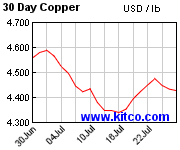
3. PRIX DU CUIVRE

  Cobre a 30 d [Most Recent Quotes from www.kitco.com]

4. ARGENT/SILVER/PLATA

5. GOLD/OR/ORO

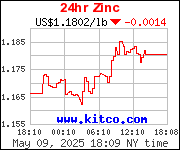
6. precio zinc

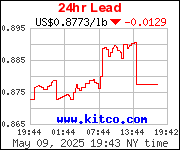
7. prix du plomb

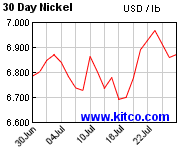
8. nickel price

10. PRIX essence


petrole on line

Find out how to invest in energy stocks at EnergyAndCapital.com.

azucar

azucar
mercados,materias primas,azucar,precios y graficos azucar i otros

15 ago 2011

Fwd: Macroperu EE.UU El desplome del Bank of America

EE.UU

El desplome del Bank of America


El precio de las acciones de Bank of America (BAC) se ha desplomado un 20.32% el día 8 de agosto del 2011.  Recordemos que este banco comercial es el más grande de Estados Unidos por valor de activos, del cual existe hoy en día una alarma financiera por parte de los inversionistas que están preocupados por la caída de los precios de sus acciones.  Jonathan Weil, columnista de Bloomberg, en su artículo titulado Curse the geniuses who gave us Bank Of America(1), menciona que "En cuanto al mercado se refiere, es falso más de la mitad del valor en los libros de la empresa, debido a los activos sobrevalorados, pasivos subestimados o alguna combinación de los dos".
El informe del Bank of America del segundo trimestre del 2011(2) hace mención que el valor de las acciones en libros es de 21.45 dls pero en la plaza financiera del Dow Jones su precio de cierre al 8 de agosto del 2011 fue de 6.51 dls. Es decir los inversionistas no creen que valga lo que el banco publica; la perspectiva de éstos es que hasta ese día, ellos creen que el banco vale aproximadamente un tercio de lo que dice el informe.
En este informe se publica que el banco tuvo perdidas por un valor de 9,127 millones de dólares las mayores de la historia del banco(3).  Estas pérdidas están relacionadas a cuestiones hipotecarias.
Los temores que existen, a parte de los mencionados por Weil, son por las demandas que se han hecho en contra de este banco en temas relacionados con hipotecas. Bank of America durante la crisis compró a dos bancos, Countrywide y Merrill Lynch, y ahora enfrenta acusaciones de fraudes hechos por él y por estas dos instituciones financieras.
Uno de los demandantes actuales es la "paraestatal" A.I.G.  Mencionemos algo que difícilmente se publica, esta empresa se encuentra limitada en algunas cuestiones jurídicas, por el hecho de que cuando fue rescatada por el gobierno de Estados Unidos de su inminente quiebra, se le hizo firmar un acuerdo en donde se le prohibía demandar a los grandes bancos en temas relacionados a los bonos de las hipotecas(4).  La cuestión es: ¿por qué ahora está demandando a Bank of America?  A.I.G se defiende diciendo que existen algunos valores de bonos que no se pueden catalogar dentro del acuerdo que firmó.  Pero las causas principales de estas demandas, según mi análisis, en caso de ganarlas podrán en parte resarcir pérdidas provocadas por el derrumbe del mercado hipotecario y así aumentar su flujo en caja para tener una mayor liquidez y con ello una mayor capitalización.
Todos los problemas mencionados, más la actual incertidumbre de los mercados por la rebaja de calificación de la deuda de Estados Unidos, han llevado a desplomarse el precio de las acciones de Bank of America.  Tan solo en los primeros seis días bursátiles de este mes (del 1 de agosto al 08 de agosto del 2011) ha tenido una contracción del 33.3% y en lo que va de este año la caída ha sido del 54%, y anualmente la caída es de 53.3%, pero si lo calculamos desde su valor más alto después de la crisis (9 de abril del 2010), tenemos una contracción del 65%. (Ver gráfico)

510
No se menciona mucho pero es momento de comenzar a preocuparnos por el futuro de Bank of America y su posible nuevo rescate por parte de la Reserva Federal (Fed).  Lo más posible es que la Fed le extienda una línea de crédito y hasta podría comprar acciones del banco.
- Leonel Carranco Guerra, Facultad de Economía, UNAM.
2) Bank Of America, Supplemental Information, Second Quarter 2011
__._,_.___

AmericaSur: Una agenda para la desconexión

AmericaSur

Una agenda para la desconexión

Raúl Zibechi


Con 700 mil millones de dólares de reservas monetarias, 400 millones de habitantes, grandes reservas de hidrocarburos, autonomía energética, importantes yacimientos mineros, la mayor biodiversidad del planeta, la región sudamericana no tienen ningún motivo para no despegarse de la crisis sistémica en curso y elaborar su propia agenda política y económica.
En las últimas semanas, ministros y presidentes de la región se pronunciaron por establecer medidas defensivas para evitar contagios de la crisis que afecta al primer mundo. Cristina Fernández dijo que "debemos blindar la región para no perder lo que hemos logrado"[1]. Guido Mantega, ministro de Hacienda de Brasil, se pronunció por establecer "un cordón de aislamiento" para evitar perjuicios[2]. Hasta el conservador presidente de Colombia Juan Manuel Santos advirtió en la Cumbre de UNASUR en Lima que se deben contrarrestar los efectos nocivos de las crisis económicas por las que atraviesa Estados Unidos y Europa que devalúan los ahorros de la región[3].
Son miradas positivas que muestran una toma de conciencia generalizada de que hay que actuar pronto. Pero las medidas defensivas son insuficientes. Mantega se equivoca cuando asegura que "la cuestión de fondo es la recuperación económica de Estados Unidos y de Europa, porque aquí sufrimos las consecuencias"[4]. En primer lugar, esa recuperación salvadora no va a llegar porque las economías que Oscar Ugarteche define como "países ricos altamente endeudados", ingresaron en un período de austeridad y estancamiento, o crecimiento muy lento, incapaz de reactivar la economía mundial.
En segundo lugar, y esto es decisivo, porque estamos viviendo un completo rediseño del sistema-mundo, no sólo de la economía. En pocas palabras: la relación centro-periferia se ha roto y están en proceso de conformarse nuevos centros regionales, eso que llamamos BRICS (Brasil, Rusia, India, China y Sudáfrica) con relaciones de otro tipo con sus propias periferias y con los viejos centros de poder en decadencia. A eso se suma la crisis de la hegemonía estadounidense y la consolidación de un mundo multipolar. Occidente ha dejado de ser el centro del mundo cuyo eje se traslada rápidamente hacia Asia, un cambio de envergadura que supera nuestra capacidad de imaginación, sobre todo en el terreno cultural. Y a todo esto debería sumarse el peak oil, la progresiva decadencia de la civilización del petróleo, y la crisis ambiental y climática en curso.
La advertencia de Immanuel Wallerstein acerca del "colapso importante que se avecina" y la necesidad de botes salvavidas para afrontarlo, debe ser tomado con la mayor seriedad[5]. En su opinión, Europa está ensayando la creación de un fondo monetario europeo de facto, como se desprende del último salvataje a Grecia que pasa por establecer una estructura de gobernanza común.
China está considerando dejar de comprar no sólo bonos del gobierno estadounidense sino activos en ese país[6]. Siendo el principal acreedor y comprador de bonos de la Reserva Federal, una decisión de ese tipo no haría sino acercar a Washington al temido default. Asia Times publica un excelente informe sobre el "colapso de la clase media en Estados Unidos", donde demuestra que la crisis inmobiliaria será de muy larga duración por razones demográficas y los beneficios de las pequeñas empresas, donde invierten sectores importantes de las clases medias, están lejos de recuperarse[7].
En síntesis, "hay mucha crisis por delante y urge por tanto pensar Sudamérica seriamente"[8]. El desafío mayor es que la región no puede pensarse en función de lo que suceda con la economía global sino en base a sus propias prioridades y la primera de ellas es construir su propia agenda: desconectarse del mundo rico endeudado y muy en particular del sistema financiero y de las multinacionales. Son ellos los que necesitan "invertir" en América Latina porque es en esta región donde hacen sus negocios y obtienen las ganancias que ya no consiguen en el mundo endeudado.
Para este objetivo es ineludible acelerar algunas medidas como la puesta en marcha efectiva del Banco del Sur, redireccionar los flujos de hidrocarburos hacia la propia región, abandonar el apego al dólar y sustituirlo por una moneda regional y seguir fortaleciendo el comercio y los vínculos Sur-Sur. Son propuestas largamente discutidas en la región, pero cuya implementación se viene demorando en gran medida por el escaso interés que vienen mostrando algunos de los países que juegan el papel de liderazgo.
Aún así, son medidas insuficientes. Porque, en rigor, no se trata de una o de varias crisis sino de una reconstrucción del mapa mundial que brinda a la región la posibilidad de modificar a su favor la distribución del poder en el mundo para que sea algo más equitativo. Las enormes reservas de Sudamérica, casi tan elevadas como las de Japón pero sin el lastre de su gigantesca deuda, deben ser usadas ahora para introducir cambios de larga duración. Quizá el más importante sea dar un vuelco en el terreno de la ciencia y la tecnología, en investigación e innovación.
El retraso es gigantesco. Brasil, con el 2,3% del PIB mundial solicita el 0,3% de las patentes, siendo el único sudamericano que se ha propuesto elevar sus inversiones en la materia. Registra menos de 500 patentes anuales, frente a 45 mil de Estados Unidos[9]. Los países asiáticos muestran que es posible dar un vuelco. En los últimos 20 años China, India y Corea del Sur experimentaron un crecimiento exponencial en la innovación. Se estima que para 2020 China superará a Estados Unidos como principal productor mundial de conocimientos científicos[10].
Pese a que tiene reservas de 11 mil millones de dólares, Bolivia invierte sólo 40 millones anuales en ciencia y tecnología, el 0,1% de su presupuesto. Por lo tanto, debe recurrir a las multinacionales para industrializar el litio. Los demás países de la región tienen una situación muy similar. Pero sin dar este vuelco en el dominio de la ciencia y la tecnología, será imposible en un plazo razonable, digamos de dos décadas, dejar de ser exportadores de commodities, dejar el extractivismo y tomar un rumbo nuevo.
Por último, no será posible desconectarse del caos sistémico en curso sin conflictos ni pérdidas, eludiendo desgarros internas. Eso es una crisis. Quiebre y ruptura para cambiar el rumbo.
- Raúl Zibechi, periodista uruguayo, es docente e investigador en la Multiversidad Franciscana de América Latina, y asesor de varios colectivos sociales.


[1] Página 12, 29 de julio de 2011.
[2] Valor, 3 de agosto de 2011.
[3] Página 12, 30 de julio de 2011.
[4] Valor, 3 de agosto de 2011.
[5] La Jornada, 4 de agosto de 2011.
[8] Oscar Ugarteche en ALAI, 3 de agosto de 2011.
[9] Proyecto Brasil en Tres Tiempos, Presidencia, 2004.
__._,_.___

Ugarteche: EE.UU Banana Republic

EE.UU

EE.UU.: Banana Republic


Las cifras mágicas del (de)crecimiento
Aunque antes de la crisis no era evidente que Estados Unidos, Europa y Japón ya eran Países ricos altamente endeudados (PRAE), la realidad fue que después del 2007 todos comenzaron a sentir los impactos de su alto nivel de endeudamiento privado y público.  La dimensión del problema del 2007 en adelante fue menos evidente para Estados Unidos, que con una altísima deuda interna por consumo, no se esperaba que fuera a entrar en una espiral contractiva marcada.  Se pensó que habría un ajuste en las cuentas hipotecarias y se retomaría el camino del crecimiento.  No fue así.  Lo difícil es que EEUU ha optado por la política del avestruz para no espantar a las expectativas.  Dicen un dato de crecimiento económico y luego lo corrigen para abajo y entonces cuando tres trimestres después miras los datos, sale otra historia.  Los ajustes de crecimiento económico más recientes son los siguientes: "Del cuarto trimestre de 2007 al primer trimestre de 2011, el verdadero PIB disminuyó en un tasa promedio anual del 0.2 por ciento.  En las estimaciones antes publicadas, el verdadero PIB había aumentado en una tasa promedio anual del 0.2 por ciento." (http://www.bea.gov/newsreleases/national/gdp/gdpnewsrelease.htm)
J.P. Morgan prevé recesión en EEUU en el semestre entrante y los años venideros (1).  Los pronósticos europeos, aunque fueron mejores, se han deteriorado (2).  Lo que empezó como un problema de finanzas, como en 1929, se está transformando en un problema mayor de paradigma productivo y de reglas del juego: es decir de paradigma teórico y tecnológico.  Los ajustes económicos que el FMI y el Banco Central Europeo le piden a los europeos, no obstante, son análogos a los que le pedían a América Latina en su tiempo, aunque lo que haya causado esta crisis sea la teoría donde los mercados desregulados resuelven sus propios problemas y a menor intervención del Estado mayor crecimiento económico.  Mientras el sector financiero no necesite ayuda del Estado, claro.  Ni las corporaciones. Las correcciones a las utilidades de las corporaciones son de este tipo: "las ganancias corporativas fueron revisadas a la baja en el 1.1 por ciento al 2008.  Éstas fueron revisadas al alza en 8.3 por ciento para el 2009, y al alza en 10.8 por ciento al 2010." (Ibid)
Mostrar que fueron muy rentables cuando se estuvo diciendo que perdían dinero y que por eso recibieron apoyos estatales, como ha señalado Atilio Boron, es una tomadura de pelo no digna de una cultura que se ha preciado de decir siempre la verdad y de un cuerpo institucional que parte de la premisa que los datos de la Bureau of Economic Activity provienen de una agencia seria.  Hace varios años que trampean los números y luego sale el reajuste que no tiene nada que ver con las proyecciones, como en América Latina en los años 80.  Pero este último reajuste parece ser el más serio de todos.  Es decir nos están diciendo que las empresas tuvieron utilidades cuando recibieron el apoyo, pero que en el 2008 estuvieron al ras.  Esta no fue la figura planteada en el 2008.  Las utilidades resulta que crecen pero el PIB no.  Esta es la concentración del ingreso fabricada con un sistema productivo e impositivo construido por los republicanos desde la década del 80, al menos bajo el paraguas de la globalización.
Sacrificar el prestigio nacional para sacar a Obama del juego
La forma de resolución de los límites de endeudamiento en Estados Unidos ha venido a demostrar que los republicanos están dispuestos a sacrificar la economía de Estados Unidos con tal de que Obama no salga reelegido.  Pueden quebrar su país con tal que no les suban los impuestos al 0.01% de la población beneficiado con la reducción de impuestos a los más ricos. Esto es a 35,000 personas.  El argumento es que sino dejarán de invertir.  O sea dejarán de jugar en bolsa y de especular con la deuda de España, Italia, los precios de los alimentos y el petróleo, en fin, una tragedia horrenda.
China creó su propia agencia calificadora de riesgos en lo que es la respuesta al abuso de las tres agencias calificadoras de riesgo incluidas en el NRSR de Estados Unidos, que calificaron lo que sus clientes les dijeron y propiciaron la venta de papeles basura a inversionistas ajenos a esos datos.  Moody's y Standard & Poor's (S&P) combinadas son aproximadamente el 80 % de la cuota de mercado mundial total, con Fitch que suma aproximadamente un 15 %. Mientras las otras 127 empresas en el mundo ocupan 3% del mercado mundial de análisis de riesgos. La calificadora de riesgo global de la China, Dagong, rebajó la calificación de riesgo de Estados Unidos, primero de AAA a A+ en noviembre pasado y ahora de A+ a A- (3). Esta es la única empresa calificadora no estadounidense que provee a los inversionistas asiáticos criterios de inversión.  Dijeron: "Los defectos en la estructura política expuesta en la lucha de los dos partidos indican que el gobierno de los EEUU tiene dificultad en la resolución de la crisis soberana de deudas en última instancia.  El interés y la seguridad de acreedores de los EEUU carecen de una garantía de los sistemas político y económico".
Si los chinos no creen en Estados Unidos y el peso del comercio entre ambos se ha reducido en la década inicial del siglo, hay un proceso de rediseño de la economía mundial en curso.  Los republicanos harán cualquier cosa para que fracase Obama, inclusive inmolar al país en el desprestigio internacional.  ¿Qué harán cuando sean gobierno?  Hay mucha crisis por delante y urge por tanto pensar Suramérica seriamente.  Los latinoamericanos aquejados de economías dolarizadas deberían de ver como salen de eso, que los puede llevar a una devaluación aún mayor con los efectos inflacionarios correspondientes.  Lo que se viene cayendo y seguirá cayendo es el dólar.  Y con eso el prestigio de la economía líder.
- Oscar Ugarteche, economista peruano, trabaja en el Instituto de Investigaciones Económicas de la UNAM, México. Es presidente de ALAI y coordinador del Observatorio Económico de América Latina (OBELA) http://www.obela.org

Feral Capitalism Hits the Streets

Slash and Burn as the New Normal

Feral Capitalism Hits the Streets

By DAVID HARVEY
"Nihilistic and feral teenagers" the Daily Mail called them: the crazy youths from all walks of life who raced around the streets mindlessly and desperately hurling bricks, stones and bottles at the cops while looting here and setting bonfires there, leading the authorities on a merry chase of catch-as-catch-can as they tweeted their way from one strategic target to another.
The word "feral" pulled me up short. It reminded me of how the communards in Paris in 1871 were depicted as wild animals, as hyenas, that deserved to be (and often were) summarily executed in the name of the sanctity of private property, morality, religion, and the family. But then the word conjured up another association: Tony Blair attacking the "feral media," having for so long been comfortably lodged in the left pocket of Rupert Murdoch only later to be substituted as Murdoch reached into his right pocket to pluck out David Cameron.
There will of course be the usual hysterical debate between those prone to view the riots as a matter of pure, unbridled and inexcusable criminality, and those anxious to contextualize events against a background of bad policing; continuing racism and unjustified persecution of youths and minorities; mass unemployment of the young; burgeoning social deprivation; and a mindless politics of austerity that has nothing to do with economics and everything to do with the perpetuation and consolidation of personal wealth and power. Some may even get around to condemning the meaningless and alienating qualities of so many jobs and so much of daily life in the midst of immense but unevenly distributed potentiality for human flourishing.
If we are lucky, we will have commissions and reports to say all over again what was said of Brixton and Toxteth in the Thatcher years. I say 'lucky' because the feral instincts of the current Prime Minister seem more attuned to turn on the water cannons, to call in the tear gas brigade and use the rubber bullets while pontificating unctuously about the loss of moral compass, the decline of civility and the sad deterioration of family values and discipline among errant youths.
But the problem is that we live in a society where capitalism itself has become rampantly feral. Feral politicians cheat on their expenses, feral bankers plunder the public purse for all its worth, CEOs, hedge fund operators and private equity geniuses loot the world of wealth, telephone and credit card companies load mysterious charges on everyone's bills, shopkeepers price gouge, and, at the drop of a hat swindlers and scam artists get to practice three-card monte right up into the highest echelons of the corporate and political world.
A political economy of mass dispossession, of predatory practices to the point of daylight robbery, particularly of the poor and the vulnerable, the unsophisticated and the legally unprotected, has become the order of the day. Does anyone believe it is possible to find an honest capitalist, an honest banker, an honest politician, an honest shopkeeper or an honest police commisioner any more? Yes, they do exist. But only as a minority that everyone else regards as stupid. Get smart. Get Easy Profits. Defraud and steal! The odds of getting caught are low. And in any case there are plenty of ways to shield personal wealth from the costs of corporate malfeasance.
What I say may sound shocking. Most of us don't see it because we don't want to. Certainly no politician dare say it and the press would only print it to heap scorn upon the sayer. But my guess is that every street rioter knows exactly what I mean. They are only doing what everyone else is doing, though in a different way – more blatently and visibly in the streets. Thatcherism unchained the feral instincts of capitalism (the "animal spirits" of the entreprenuer they coyly named it) and nothing has transpired to curb them since. Slash and burn is now openly the motto of the ruling classes pretty much everywhere.
This is the new normal in which we live. This is what the next grand commission of enquiry should address. Everyone, not just the rioters, should be held to account. Feral capitalism should be put on trial for crimes against humanity as well as for crimes against nature.
Sadly, this is what these mindless rioters cannot see or demand. Everything conspires to prevent us from seeing and demanding it also. This is why political power so hastily dons the robes of superior morality and unctuous reason so that no one might see it as so nakedly corrupt and stupidly irrational.
But there are various glimmers of hope and Light around the world. The indignados movements in Spain and Greece, the revolutionary impulses in Latin America, the peasant movements in Asia, are all beginning to see through the vast scam that a predatory and feral global capitalism has unleashed upon the world. What will it take for the rest of us to see and act upon it? How can we begin all over again? What direction should we take? The answers are not easy. But one thing we do know for certain: we can only get to the right answers by asking the right questions.
David Harvey is Distinguished Professor at the Graduate Center of the City University of New York. His latest book is The Enigma of Capital and the Crises of Capitalism. He can be reached through his website.
__._,

Sobre las manifestaciones de Londres


What isn't behind the London riots


  • By Jonathan Freedland, Published: August 11

London
To a watching world, the sight of Britain on fire this week has surely been shocking. The looting and torching has revealed an inner-city London, Birmingham and Manchester seldom glimpsed in the England usually offered for export via soft-focus period dramas, Hugh Grant movies or stories on Will and Kate.

If the revelation has puzzled outsiders, it has confused Britons no less. The mood here is a mixture of rage, fear and bafflement. Not that we're not used to riots: We are. England caught fire during that other royal-wedding year, 1981. But 30 years ago, the battle lines were relatively clear. Race was central, especially in the predominantly black south London neighborhood of Brixton. The target then was a police force charged with racial bias. But the recent explosions have had none of that clarity.
Even though the troubles ignited last weekafter the police killing of a black Briton in the north London area of Tottenham, the copycat outbursts since have lacked that racial dimension. Among the looters, all races have been represented, while their targets have not been overtly political. They have not hurled stones at police stations, city halls or the Houses of Parliament. Instead, these rapidly mobilized crowds have concentrated their fire on stores, especially those selling cellphones, sneakers and large-screen TVs. One looter was seen trying on different pairs of shoes, making sure she stole the right size.
The Guardian's Zoe Williams has called these the "shopping riots," noting the way the mobs move from malls to main-street stores, avoiding confrontation with the police, in contrast with the 1981 rioters, who actively sought it. If today's looters have a political point to make, it is that politics doesn't matter.
I walked the length of Tottenham's High Road on Wednesday, as demolition crews removed what was left of the large carpet store burned to ash on Saturday. I listened to Mohammed Abdi, a Somali-born cellphone store owner whose life's work was destroyed that night. "It took an age to build this business — and now I have nothing," he told me. The local member of Parliament, David Lammy, was doing his best to hug and reassure those whose neighborhood was ravaged. "The consumerist and materialist nature of it is new," he said. "And it's of this generation."
The methods are new, too: using instant-messaging technology to assemble a crowd; diverting police to one place by, say, burning a car; and then, once law enforcement is safely distracted, starting looting in another. The fact that police officers cannot be everywhere at once has proved their Achilles heel, making them all but powerless. The short-term remedy has been to triple the number of police on duty in London, which restored calm here Tuesday night but which is no more a long-term solution than the pleas for BlackBerry to turn off its instant-messenger system. One Tottenham resident warned Wednesday that the rest of the world should brace for the spread of this new "social criminality."
__._,_.___

30 jul 2011

Resiliencia macroeconómica


Tomado de Macroeconomic Resilience
with 2 comments


In an excellent article, Mark Thoma highlights the great divide between academics and practitioners in economics. He also identifies the fundamental reason for this divide – practitioners typically rely on intuition and rough heuristics whereas academics rely on rigorous theoretical constructs.


In Herbert Simon's terminology, practitioners are satisficers, not optimisers. In a recent post, I outlined my preferred framework to analyse monetary policy as an attempt to influence the real rate curve. Clearly, this viewpoint is not rigorous but for my purposes transforming this framework into a theoretically watertight construct is not worth the effort. The aim of the framework is simple to give me a quick and dirty but useful way to process information and market data. It is also almost certain that in some scenarios, this framework will break down – but instead of thinking about all such scenarios in advance, I simply trust that my experience and my gut instinct will warn me when such a scenario occurs.


To most academics, the process I have outlined above would seem to be a distinctly unscientific and "irrational" method. But as I have argued before, heuristics and intuition are rational responses in an uncertain environment where time and resources are scarce. Herbert Simon and Gerd Gigerenzer have both done excellent work on the role of heuristics but the most relevant research on the role of intuition has been undertaken by Gary Klein and other researchers in the field of 'Naturalistic Decision Making' (NDM). NDM originated from Klein's work in analysing the decision-making of firefighters – as Klein explains in this recent interview, expert firefighters follow a process that is far removed from the conventional definition of rational choice. They "build up a repertoire of patterns so that they can immediately identify, classify, and categorize situations, and have a rapid impulse about what to do. Not just what to do, but they're framing the situation, and their frame is telling them what are the important cues. That's why they're always looking, or usually looking, in the right place. They know what to ignore, and what they have to watch carefully." There's nothing magical about this:
"Intuition is about expertise and tacit knowledge. I'll contrast tacit knowledge with explicit knowledge. Explicit knowledge is knowledge of factual material. I can tell people facts, I can tell them over the phone, and they'll know things. I can say I was born in the Bronx, and now you know where I was born. That's an example of explicit knowledge, it's factual information.
But there are other forms of knowledge. There's knowledge about routines. Routines you can think of as a set of steps. But there's also tacit knowledge, and expertise about when to start each step, and when it's finished, when you're done and ready to start the next one, and whether the steps are working or not. So even for routines, some expertise is needed.
There are other aspects of tacit knowledge that are about intuition, like our ability to make perceptual discriminations, so as we get experience, we can see things that we couldn't see before….

Judgments based on intuition seem mysterious because intuition doesn't involve explicit knowledge. It doesn't involve declarative knowledge about facts. Therefore, we can't explicitly trace the origins of our intuitive judgments. They come from other parts of our knowing. They come from our tacit knowledge and so they feel magical. Intuitions sometimes feel like we have ESP, but it isn't magical, it's really a consequence of the experience we've built up."
Larry Summers is correct in noting that the solution is not for practitioners to become academics. It is for more academics to rigorously analyse the intuitive and heuristic-based methods and explanations that practitioners use. The real gap is in the paucity of applied economists and the misguided view of applied work with data-crunching rather than practical knowledge. As Daniel Kahneman explains in his introduction to Gary Klein's interview:
"In the US, the word "applied" tends to diminish anything academic it touches. Add the word to the name of any academic discipline, from mathematics and statistics to psychology, and you find lowered status.  The attitude changed briefly during World War II, when the best academic psychologists rolled up their sleeves to contribute to the war effort. I believe it was not an accident that the 15 years following the war were among the most productive in the history of the discipline.  Old methods were discarded, old methodological taboos were dropped, and common sense prevailed over stale theoretical disputes. However, the word "applied" did not retain its positive aura for very long. It is a pity.
Gary Klein is a living example of how useful applied psychology can be when it is done well. Klein is first and mainly a keen observer. He looks at people who are good at their job as they exercise their skills, sometimes in life-and-death situations, and he reports what he sees in clear and eloquent prose.  When you read his descriptions of real experts at work, you feel that it is the job of theorists to accommodate what he has seen – instead of doing what we often do, which is to scan the "real world" (when we think of it at all) for illustrations of our theoretical notions."
The divide that Mark Thoma identifies is not restricted to economics – in the age of 'Big Data', all academic disciplines are moving away from the sort of work that requires researchers to get their hands dirty. In an excellent post, Jennifer Jacquet explains how field ecologists like Robert Paine are a dying breed, being replaced by ecologists more at home on a computer than in the field. This is not a criticism of mathematical ecology, simply an assertion that the kind of insights that Bob Paine derived from spending "45 years knee-deep in kelp and invertebrates on Washington State's coast" are valuable and cannot be replicated by other means. This presumption that data and theory can substitute for experience on the ground is symptomatic of the broader problem of the downgrading of tacit and contextual knowledge highlighted by many other changes in academic economics, most notably the neglect of economic history and institutional detail. One of the most striking deficiencies in economic theory that was exposed during the crisis was the disconnect between monetary economics and the institutional reality of the new regime of shadow banking and derivatives. Hyman Minsky's theories are relevant not because of their theoretical elegance but because of their firm grounding in the institutional evolution of the post-war monetary and banking system, a topic that he researched in great detail.


An example of how this balance between the theoretical and applied fields can be restored is provided by the collaborative work between Daniel Kahneman and Gary Klein. Kahneman and Klein have spent their entire careers tackling the same field (the psychology of decision-making) with diametrically opposed approaches – Kahneman focuses on controlled lab experiments, comparisons of decision-making performance to an objective optimum, and a generally skeptical stance towards human cognition. Klein focuses on research in real-world organisations, analysis of actual performance through more subjective variables and a generally admiring stance on human cognition. Yet they were able to collaborate and find common ground, the results of which are summarised in a fascinating paper. Economics could do with more applied researchers like Gary Klein as well as more theoretical researchers like Daniel Kahneman who are open to applied practical insights.


++++++++++


A great divide holds back the relevance of economists

Jul 26, 2011 08:45 EDT


economics | forecasts
By Mark Thoma
The opinions expressed are his own.


Reuters invited leading economists to reply to Mark Thoma's Op-Ed on the "great divide" in economics and will be publishing the responses. Here are responses from Ashwin Parameswaran, James Hamilton, Dean Baker, Lawrence Summers, and a recap of Paul Krugman's.


How much confidence would you have in the medical profession if the teaching faculty in medical schools had very little experience actually treating patients, and very little connection to – even a lack of respect for – the practitioners in the field? Would your confidence be improved if medical research had little to do with the questions that are important to the doctors trying to serve patients?
Unfortunately, that's a pretty good description of how economics has been practiced. The questions academic economists are trying to answer have little connection to the problems faced by business economists trying to help their firms make good, profitable decisions (and vice-versa). And though academics pay some attention to government policy, particularly Federal Reserve policy, addressing the problems faced by government economists trying to help policymakers make the best possible choices is not the main focus of this research.
This division between academic, government, and business economists is driven by the fact that economic theory and econometrics can be used for two different things. One is learning about how the world works. These "how and why" questions are the focus of academic research. For example, academic economists try to understand why demand curves slope downward, how business-cycle fluctuations in GDP come about, and how prices are determined in market economies.
The other use of theoretical and empirical economic models is forecasting, for example predicting where the economy is headed so that businesses can react accordingly, and predicting what might happen if various government policy proposals are implemented. These are the "what if" questions that economists in government and business are most interested in. What will happen to tax revenue if business taxes are cut? What will happen to the demand for my product if the Fed raises interest rates? What is the most likely course that the economy will take?
Again, a comparison with the medical field is useful. Science can help us to learn about how the body works, and that certainly aids our efforts to battle disease. This is an important area of research, and we wouldn't want to cut it short. But knowing how the body works isn't enough, we also need the ability to diagnose current illnesses and to predict when someone is going to get sick. In addition, we need to have treatments available to fix the problems that we've identified. Periodic checkups, for example, allow us to predict who might get coronary disease, and then take action to avoid much bigger problems down the road.
Academic economists have emphasized the "how it works" part of economics; in econometrics, for example,  the focus is on hypothesis testing to determine which model of the economy is best, rather than on forecasting the future of the economy. Academic economists do evaluate policy proposals theoretically and empirically, and they do provide forecasts of the economy. But forecasting in particular is not the main focus of their efforts, , and they've all but ignored – even looked down their noses upon – forecasters and practitioners in the government and business communities. They are often viewed as data grubbers who use old-fashioned models and techniques, and are thus unworthy of attention from high-minded academics.
However, a few practitioners saw the housing bubble coming. Shouldn't academic economists try to learn from them? What did they see that the academics missed? In addition, if the practitioners in the field are unaware of or do not have the technical ability to use the best approaches to the problems they face – criticism from academic economists over how business economists used value-at-risk models prior to the recession comes to mind – whose fault is that? Shouldn't academics try to help the practitioners get over this hurdle instead of turning their backs on the problem, and then looking down at them when they don't use or misapply cutting edge techniques?
The failure of academic economists to predict the crisis shows just how costly such insularity and arrogance can be. The patient (the economy) didn't need to have a heart attack (financial meltdown), because even though the signs were there, the academic community had little interest in learning how to read them, let alone in developing early warning and intervention strategies for bubbles and other problems. The Fed does some of this, of course, and the financial crisis has motivated some academic interest in developing early warning systems that would have helped us to identify and do something about stock, housing, and other bubbles before they inflated to dangerous levels.
The medical profession would do much worse without connections between the practitioners in the field and the how-it-works types in the labs. The questions researchers ask, for example, are shaped by the needs of the practitioners trying to prevent and cure illness. What types of tests can doctors do in their offices and labs to quickly and reliably indicate the current health of a patient and to forecast future health problems? In economics, if reliable tests for bubbles had been available to business economists, that could have saved the economy from considerable losses.
Economics has lost the connection between the practitioners and the academics. This may have something to do with the desire among economists to become more of a science – a heavy focus on theory and math is the result. But no matter the cause, if we want to do all that we can to avoid big economic problems, and if we want to use the feedback from those testing economic ideas on real world applications as a way of better understanding how the economy works, then we must reestablish these ties.


PHOTO: A stethoscope rests on a container of hand sanitizer inside of the doctor's office of One Medical Group in New York March 17, 2010. REUTERS/Lucas Jackson


24 jun 2011

El lunes EEUU llega a su techo de endeudamiento

Entrará EEUU en default o a última hora el Congreso aumentará el límite de endeudamiento. Si no sucede los bonos del tesoro de EEUU subirán su prima de riesgo y podría colapsar el sistema financiero como en el 2008. Puede que sea el preludio de la devaluación del dolar que corrija la situación del déficit pero habrá que pensar en el reemplazo del dolar en el comercio mundial. Pero la pregunta es: ¿son los bonos del tesoro de EEUU papeles libres de riesgo como se consideran actualmente?

Tea Party Brinkmanship

What If the U. S. Looks Like Defaulting?

By MIKE WHITNEY
On Monday, the US government hit the statutory limit on the amount of money it can borrow, ($14.29 trillion) the so-called "debt ceiling". That means that Treasury Secretary Timothy Geithner has started to implement an emergency plan to keep the government running and pay bondholders while the White House and Congress hammer out the details on a final budget deal. But Geithner's accounting maneuvers will only work for a short time. If a budget compromise isn't reached by early August, then "the borrowing authority of the United States will be exhausted" and the US will default.
Some Republican congressmen believe that a default will be "no big deal", and that bondholders and Social Security recipients will just get their checks a little later than usual. But these people really don't understand the way the system works or what is at stake. As The Economist's Greg Ip says,  "Treasury debt underpins a vast and complex web of financial relationships around the world which would all be thrown out of whack by even a technical default."  The mere suggestion that the US might delay payments to bondholders would roil markets and cause irreversible damage to the Treasuries market. That, in turn, would put the dollar into a nosedive and, perhaps, end its role as the world's reserve currency. Here's an excerpt from a post by economist Menzie Chinn who sums it up perfectly:
"....what would be key to causing a crash in the dollar's value would be a failure to raise the debt ceiling in a timely fashion. In almost any model I can think of, that would either cause a flight from US government debt, or -- even if we only go to the brink -- elevating the risk premium, and hence total interest payments, on US Treasury debt indefinitely. Thus, it's the height of irresponsibility to make unrealistic demands for deficit reduction based solely on spending cuts, thereby risking a crisis. ("What Would Really Bring about a Dollar Dive?, Econbrowser)
Nearly every other economist says the same thing. Congress is playing with dynamite.
What's obvious in the budget negotiations, is that the Republicans haven't the foggiest idea of how the financial markets work.  Of course, the Dems aren't much better, but at least they (occasionally) consider the advice of the experts . Not the Republicans. They seem to take great pride in their boneheadedness.  They think that threatening to blow up the economy is a sound strategy for forcing cuts to entitlement spending. They don't realize that their little game of chicken could backfire and change the perception that the US is a safe place for investors to park their money. In fact, the thought never seems to enter their mind.
Here's an excerpt from a letter by Geithner (to Senator Michael Bennet) warning of "catastrophic economic consequences" if the debt limit is not raised soon:
"The unique role of Treasuries securities in the global financial system means that the consequences of default would be particularly severe. Treasuries securities are a key holding on the balance sheets of virtually every major insurance company, bank, money market fund, and pension fund in the world. They are also widely used as collateral by financial institutions to meet their day-to-day cash-flow needs in the short-term financing market."
Geithner is explaining how the "shadow banking system" works and how it relies on "risk free" Triple A collateral. If the world's premier asset class--US Treasuries--suffers a downgrade because of default or falling public confidence, that would lead to widespread haircuts that would trigger another financial crisis.
Geithner again:
"A default on Treasury debt could lead to concerns about the solvency of the investment funds and financial institutions that hold Treasury securities in their portfolios, which could cause a run on money market mutual funds and the broader financial system--similar to what occurred in the wake of the collapse of Lehman Brothers. As the recent financial crisis demonstrated, a sudden and severe blow to confidence in the financial markets can spark a panic that threatens the health of our entire global economy and the jobs of millions of Americans."
Geithner is not exaggerating. This WILL happen. Why?  Because this is what happened in 2008 and, unfortunately, nothing has changed. If the US defaults, then the risk premium on US Treasuries will rise and their price will fall. That means that the trillions of dollars that have been exchanged for UST's in the repo market --where financial institutions exchange cash deposits for high-grade collateral--will be revalued causing massive losses for the holders of UST's. Those losses will ripple through the money markets and commercial paper markets knocking down the same financial dominoes they did when Lehman Brothers failed.  Bottom line: None of the Dodd-Frank reforms have increased financial market stability at all. The system is as vulnerable to meltdown as it was in September 2008.
Geithner again: 
"Treasuries securities enjoy their unique role in the global financial system precisely because they are viewed as a risk-free asset....A default would call into question the status of Treasuries securities as a cornerstone of the financial system, potentially squandering this unique role and the economic benefits that come with it."
This such an important point, it might help to use an analogy.
Let's say I need some cash to finance some other business operations I have going. So, I go down to the local pawn shop with my custom-built Jaguar, my original Vermeer oil painting, and my collection of Renaissance gold coins. The pawnbroker takes one look at my trove and says he can lend me $25,000 for a week, but I'll have to pay him $26,000 to get my stuff back. I say, "Okay", and borrow the money. This allows me to keep my other business operations running. Then, a week later, I return to the pawn shop and repay the money I borrowed.
Okay, so far?
So, next week I go back to the pawn shop and try to get the same deal. Only this time, the dealer has done a little research and discovered that my custom Jaguar is actually a late-model Yugo with a flashy paint job; my original Vermeer is actually a paint-by-numbers fake I picked up at a flea market, and my collection of Renaissance gold coins, is actually a scattering of slot-machine slugs with a pyrite finish. So the dealer gets all huffy and says he'll only lend me half of what he had before, ($12,500) But that's a big problem for me, because now I don't have the money to fund my other operations or pay my employees. So I have to dig into savings (bank capital), which makes it harder for me to lend money to anyone else.  As time goes on, I am forced to sell more of my personal belongings (assets) just to stay afloat.
This is precisely what happened to the banks during the financial crisis.  Financial firms that had been providing full-value for securitized bonds (my Jaguar) got worried that those bonds might contain toxic subprime loans (my Yugo). So they reduced the amount of money they would lend on the bonds.  These so-called "haircuts" set-off a slow-motion panic that lasted for over a year, draining nearly $4 trillion from the shadow banking system. The problem was compounded by the fact that no one knew which bundles held the worst mortgages or which banks had the biggest pile of bonds. So, interbank lending began to freeze, LIBOR skyrocketed, and the credit markets ground to a standstill. When Lehman Brothers defaulted on September 15, 2008, the downward spiral accelerated and the entire financial system crashed.
If the US defaults on its debt, Treasuries will be repriced, the country's biggest banks will discover they've got less capital than they thought, and the financial system will suffer another meltdown. Only this time, it will be much worse, because Treasuries will no longer be regarded as the premier risk-free financial asset upon which all other financial assets are measured. That means the US will have to pay higher rates to meet its obligations which will make it harder to dig out of recession.
Wall Street and Big Business understand the gravity of the situation which is why they've tried to discourage GOP brinkmanship. But--to their credit--congressional members of the Tea Party have shrugged off the arm twisting and stubbornly stood their ground. The idea is that eventually, Obama will see that they have him over a barrel and he'll cave in. Isn't that the way that power works?
There's a lesson here for political activists. The Tea Party has stumbled upon a perfectly-legal "asymmetrical" strategy for effecting change, that is, locate the vulnerabilities in the system and exploit those weaknesses to shape policy. There's no reason leftists couldn't play the same sort of game, provided they were  willing to get their hands dirty.
Mike Whitney lives in Washington state. He can be reached at fergiewhitney@msn.com
__._,_.___

ADIOS a CHINAMERICA ... PLAN QUINQUENAL

Tras 3 años de debacle del mundo occidental, esta, a pesar de los intentos de 'recuperar la economia' , no ha logrado un ápice de avance. Mas bien, con las medidas tomadas, favoreciendo al sector financiero y destrozando el sector productivo en USA-EUROPA-JAPON, se han incrementado los CONFLICTOS sociales, que tienden a multiplicarse y confrontan, ahora, a sus Estados, con mayor radicalidad cada dia. Ver lo que sucede en EEUU-España-Grecia-Irlanda-Portugal etc.
China, sabemos, es el mayor importador mundial. Pero va variando sus paradigmas económicos y ello, influye en el accionar del conjunto de la dinámica económica mundial. Va  fomentando el crecimiento hacia adentro y el aumento del consumo interno, lo que llevará a disminuir las importaciones, a elevar el salario mínimo en sus diferentes regiones teniendo los inversores extranjeros que adaptarse a una situación de menores utilidades.
Las luchas de masas en Medio Oriente, de marcado tinte antidictatorial (ante satrapías longevas y sanguinarias) mientras en Europa la juventud se subleva ante una clase política que lejos de gobernar pensando en el bien común, descarga la crisis en los hombros populares dejando un porvenir incierto, nos presentan algunos datos con los que se inaugura la segunda década del siglo XXI.
  
China: el XII plan quinquenal
Adiós a "Chinamérica"


Michaël Krätke y La Brèche
Viento Sur
Traduccion Faustino Eguberri


  Stephen Roach, presidente de la Morgan Stanley Asia y profesor en Yale (Estados Unidos), confía al periódico madrileño El País del 8 de mayo de 2011:
 'China no tiene otra opción (consumir más); especialmente en esta coyuntura poscrisis, sin demanda creciente proveniente de los Estados Unidos, de Europa y del Japón. Y el gobierno va en esa dirección: ha puesto en marcha un plan para desarrollar nuevos empleos, elevar los salarios y reducir la tasa de ahorro construyendo un embrión de red de seguridad social. Son las bases de una sociedad de consumo. Esto es absolutamente necesario.
 Pero, a la vez, es un riesgo enorme. China es el principal ahorrador del mundo. Elevar el nivel de consumo (de los hogares que tienen un ahorro de precaución para hacer frente a los costes de la educación, la enfermedad, la vejez, etc) reducirá la tasa de ahorro y, con ella, el nivel de acumulación de las reservas en divisas, de la demanda en bonos del tesoro americano, de dólares estadounidenses. Ahí se encuentra el problema. Puede haber un choque si el principal ahorrador comienza a consumir, pero el principal consumidor no comienza a ahorrar. ¿Cómo se van a financiar los Estados Unidos?'
El gobierno chino se fija, oficialmente, diversos objetivos.
 El primero: aumentar la parte del consumo en el Producto Interior Bruto (PIB).
Para esto, intenta actuar sobre los salarios, en particular impulsando al alza los salarios mínimos, que son bastante diferentes según las regiones. Los salarios mínimos deberían pasar (en dólares), por ejemplo, de 167 a 196 por mes en Shanghai entre 2010 y 2011; de 164 a 202 en la importante zona industrial de Shenzen. La subida en porcentaje es importante; el salario mínimo sigue siendo modesto, pero su subida tiene un impacto en toda la escala. La parte del consumo en el PIB no ha dejado de bajar de 2002 a 2010; un enderezamiento se muestra como una necesidad económica y política para las autoridades.


Las inversiones, por el contrario, han aumentado; pero las exportaciones netas han sido frenadas desde 2009. Sin embargo, la parte en la inversión de las operaciones especulativas (en la construcción, entre otras, y en fábricas 'exigidas' por los poderes provinciales) no debe ser ignorada; lo que el gobierno intenta corregir.
 Aumentar el consumo haría a la economía menos dependiente del comercio mundial, que tiene componentes regionales importantes. Sin embargo, la subida de los salarios mínimos va a poner en cuestión la 'competitividad' de los sectores industriales que utilizan una masa de trabajadores y trabajadoras de bajo salario; esto producirá pérdidas de empleo.


¿Cuál será la reacción de las trabajadoras y trabajadores de estos sectores? Y, ¿cuál será la reacción de los capitalistas que quieren mantener su margen de ganancia, incluso en los sectores claramente más de alta gama?
 Esto en el momento en que el gobierno tiene como segundo y tercer objetivos declarados rebajar la inflación -que era oficialmente del 2,9% en el 2º trimestre de 2010 y de 5,1% en el 1º trimestre de 2011- y limitar la subida del paro?
Los interrogantes se podrían multiplicar.
 Pero una cosa está clara: un factor clave de la evolución reside en las reacciones de los asalariados y asalariadas y de los campesinos pobres durante esta fase en la que el cambio de paradigma económico está al orden del día y en la que el poder no deja de afirmar su "autoritarismo". Michael Krätke, en el artículo que publicamos a continuación, describe las nuevas orientaciones en marcha. Un tema que deberá ser seguido con más atención en esta página web. (Redacción de La Breche]


Mientras los norteamericanos y los europeos se ven estrangulados por sus planes de austeridad, la exportación alemana deja caer su mirada sobre el Este: allí, en efecto, continúa prosperando una necesidad ciclópea.
 Los países emergentes (China, Brasil e India) son los que han escapado más rápidamente a la crisis financiera mundial de 2008-2009, no sin arañazos a pesar de todo.
 En el curso del año 2009, en China, el hundimiento de las exportaciones ha conllevado el de la producción, que ha caído cerca de un 21% y ha provocado el cierre de numerosas empresas; otras 670.000, aproximadamente, han sido arrastradas en este movimiento por un efecto cascada. Esto ha llevado a un paro masivo, en particular en las provincias costeras. Más de 11 millones de trabajadores emigrantes han perdido su empleo y la tasa de paro oficial alcanza el 9%.


Nada que ver con medidas a medias


Pero a pesar de todo, China habría podido salir en peor estado de la crisis, puesto que casi ningún banco ha tenido que cerrar. Cuando las turbulencias proseguían en los mercados financieros, el gobierno del primer ministro Wen Jiabao decidió reconfigurar Shanghai como centro financiero internacional y promover Hong Kong como centro financiero offshore para sus propias obligaciones de Estado.
 En paralelo ha sido aprobado un paquete de ayudas fiscales de un montante de alrededor de 590.000 millones de dólares.
 Las provincias no se han quedado atrás, puesto que a su vez han inyectado miles de millones de yuanes en sus ciclos económicos regionales respectivos para un valor, al cambio, de 13.000 millones de dólares.
 No son medidas a medias: solo el relanzamiento coyuntural de Barack Obama puede, en dimensiones, ser comparado a esto.


Con estos programas, serán financiadas una serie de medidas que sugieren una reorientación del modelo de exportación chino y teniendo por objetivo una transformación completa de la economía.
 Este plan quinquenal, el duodécimo, cuyas lineas principales ya habían sido esbozadas el año pasado y que ha sido aprobado en marzo de 2011 en Pekin por la Asamblea Popular Nacional (parlamento) de China, es muy claro.
El gobierno ha comprendido las lecciones de la crisis y quiere el cambio.
 Saludado como "el primer plan quinquenal verde de toda la historia de China ", éste debería dejar tras él en 2015 un país más verde, más social, más igualitario, más urbano y más formado.
 Los fetichistas del crecimiento no han logrado hacer que el Partido Comunista Chino eche el freno del crecimiento:
 el crecimiento económico, ahora se encuentra por debajo de la media del período 2005-2010, en la que los objetivos de crecimiento eran ya más bajos que al comienzo del período llamado reformista. Un crecimiento ralentizado (sigue alrededor del 9% en 2011), una clara reducción del consumo de energía y de materias primas, salarios reales más elevados, un aumento del consumo privado, una expansión del sector de los servicios, un Estado social más generoso y mejor equipado:
todo esto tiene consecuencias sobre la economía mundial.
Lo que se propone
aquí es nada menos que el adiós a una "Chinamérica ", la de la asombrosa interdependencia económica entre China y los Estados Unidos.
 Los chinos quieren, en un futuro próximo, exportar mejores productos e incluso productos de alta calidad, y para ello apoyan masivamente la investigación tecnológica en las industrias clave y la importación de tecnología.
 En última instancia, China va a disminuir el saldo positivo de la balanza comercial y a reducir la cantidad de deuda estadounidense en dólares que posee aún. Lo que plantea la cuestión de saber quien el futuro próximo refinanciará el déficit estatal estadounidense si los chinos prefieren invertir su dinero en materias primas y en empresas extranjeras, más que en bonos el tesoro americano.


Inversión en la educación


China quiere acelerar el cambio estructural apostando por las nuevas industrias estratégicas tales como las tecnologías de la información, las biotecnologías, los combustibles no fósiles, las tecnologías medioambientales, las nuevas materias primas, los medios de transporte alternativos (coches híbridos y eléctricos) y la tecnología punta (trenes de alta velocidad, satélites, 'fábricas inteligentes').
Su volumen en el Producto Interior Bruto (PIB) del país debería aumentar hasta alrededor de un tres por ciento de aquí a 2015.
 El sector moderno de los servicios debería conocer una expansión que le permitiera domar el tigre del paro -que constituye hasta ahora el principal argumento contra el freno a la economía exportadora- así como el tigre de la inflación (actualmente alrededor del 4%).


El duodécimo plan quinquenal parece haber sido pensado de forma concienzuda: en el plano macroeconómico, éste se concentra en el mercado interno, a través de los proyectos macroeconómicos exclusivamente, es decir creando redes de transporte y de energía que cubran el conjunto del gigante asiático.
Para poner en pie este cambio, habrá que aumentar el potencial intelectual del país: se invertirá así masivamente (a diferencia de Alemania) en la educación y la investigación. De aquí a 2015, la media del gasto en investigación y en desarrollo en el PIB debe pasar del 1,75% actual al 4%.


Por primera vez, este plan quinquenal contiene un largo capítulo sobre el cambio climático.
 China continúa siendo el mayor consumidor de energía del mundo y preocupa por sus emisiones elevadas de dióxido de carbono. Pero la República Popular de China quiere ahora dejar detrás el carbono reemplazándole por energías limpias y reducir de aquí a 2015 sus emisiones contaminantes un 17% (40-45% de aquí a 2020).
 Para ello se pretende invertir en energías renovables, un tercio de lo que será colectado a través de los impuestos se destinará al desarrollo de éstas y, por le momento, las empresas chinas estarán obligadas por la ley a consumir una electricidad proveniente de fuentes de energía alternativas, lo que conducirá a China a generar la misma cantidad de electricidad eólica y solar que los Estados Unidos hoy.
Sin embargo el programa atómico se mantiene y nadie habla de abandonarlo. Además, en relación a la capacidad de 10,8 gigawatios de los trece reactores atómicos que existen actualmente, las nuevas centrales atómicas construidas de aquí a 2015 deberán alcanzar una capacidad de 40 gigawatios.
 Esto gustará a los constructores de reactores atómicos alemanes y francesas que se ufanan de tener las instalaciones más seguras del planeta.


* Michael R. Krätke es profesor de política económica y de derecho fiscal en la Universidad de Amsterdam, investigador asociado en el Instituto Internacional de Historia Social de esa misma ciudad y profesor de economía política y director del Instituto de Estudios Superiores de la Universidad de Lancaster en el Reino Unido.


http://www.vientosur.info/


__._,_.___
.

__,_._,___

Ciclos de Kondratieff y Economia Peruana

 
Para ayudarlos nueva figura. El arear sombreada les indica el incio de la fase depresiva del ciclo de Kondratieffa

http://bseminario.blogspot.com/2011/06/la-economia-peruana-y-los-ciclos-

de.html

http://bseminario.blogspot.com/2011/06/la-economia-peruana-y-los-ciclos-de.html

La coherencia con similar periodo de depresion en el Pe´ru es bastante elevada. 


ENTREVISTAS TV CRISIS GLOBAL

NR.: Director, no presidente ---------------------------------------------- Bruno Seminario 1 ------------------------- Bruno Seminario 2 -------------------- FELIX JIMENEZ 1 FELIZ JIMENEZ 2 FELIX JIMENEZ 3, 28 MAYO OSCAR DANCOURT,ex presidente BCR ------------------- Waldo Mendoza, Decano PUCP economia ---------------------- Ingeniero Rafael Vasquez, parlamentario 24 set recordando la crisis, ver entrevista en diario

Etiquetas

Peru:crisis impacto regional arequipa,raul mauro

Temas CRISIS FINANCIERA GLOBAL

QUIEN SOY?
claves para pensar la crisis

MATERIAS PRIMAS
-Metales
-Cobre
- plata
- oro
- zinc
- plomo
- niquel
- petroleo

-Tipo de cambio

- LA CRISIS

- BOLSA VALORES
- BANCOS
- PBI PAISES
- USA: DEFICIT GEMELOS
- UE: RIEN NE VA PLUS

CONTAGIO: CANALES

- PERU: DIAGRAMA DE CONTAGIO
- PERU: IMPACTO EN BOLSA
- MEXICO: HAY CRISIS?

LA PRENSA
COMENTARIO DE HOY

- DIARIOS DE HOY
NLACES

Coyuntura
Bancos centrales
Paginas Recomendadas

BLOGS

economiques
Interes

VIDEO

- Economia videos
- Crisis financiera global

TRICONTINENTAL

- AFRICA: daniel
- EUROPA: helene
- ASIA:
- AMERICA

COLUMNAS AMIGAS

Chachi Sanseviero

ETIQUETAS
por frecuencia de temas
por alfabetico

EVENTOS

FOTOS DEL PERU

GONZALO EN LA RED

JOBS
VOZ ME CONVERTIDOR
CLIMA
SUDOKU
PICADURAS

LOGO

LIBRO de GONZALO

La exclusion en el Peru

-Presentacion

- introduccion

- contexo economico

- crisis de la politica

- excluidos de las urbes

- excluidos andinos

- contratapa

VIDEOS ECONOMICOS
Crisis Enero 2009
Krugman
Globalizacion 1
Globalizacion 2
Crisis Brasil
Crisis bancaire
Karl marx revient

TODOS LOS DERECHOS RESERVADOS

GOOGLE INFORMA


PRESS CLIPPINGS-RECORTES PRENSA-PRESSE..

ETIQUETAS alfabetico