SECCION Crisis monetaria: US/EURO, dolar vs otras monedas

Gráfico del tipo de cambio del Dólar Americano al Euro - Desde dic 1, 2008 a dic 31, 2008

Evolucion del dolar contra el euro

US Dollar to Euro Exchange Rate Graph - Jan 7, 2004 to Jan 5, 2009

V. SECCION: M. PRIMAS

1. SECCION:materias primas en linea:precios


[Most Recent Quotes from www.kitco.com]


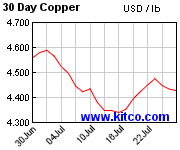
METALES A 30 DIAS click sobre la imagen
(click sur l´image)

3. PRIX DU CUIVRE

  Cobre a 30 d [Most Recent Quotes from www.kitco.com]

4. ARGENT/SILVER/PLATA

5. GOLD/OR/ORO

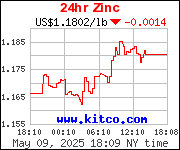
6. precio zinc

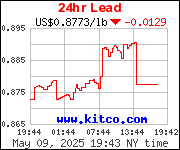
7. prix du plomb

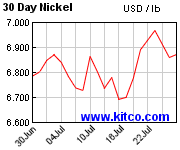
8. nickel price

10. PRIX essence


petrole on line

Find out how to invest in energy stocks at EnergyAndCapital.com.

azucar

azucar
mercados,materias primas,azucar,precios y graficos azucar i otros

26 ene 2009

FRANCE:GREVE 29 JANVIER

Grèves : «Jeudi noir»
en perspective le 29 janvier

Marc Landré
26/01/2009 | Mise à jour : 08:40
| Commentaires  385 | Ajouter à ma sélection
La grève, qui touchera les transports urbains, les services publics et les entreprises privées, vise à faire plier le gouvernement, accusé de ne pas faire suffisamment pour les Français.
La grève, qui touchera les transports urbains, les services publics et les entreprises privées, vise à faire plier le gouvernement, accusé de ne pas faire suffisamment pour les Français. Crédits photo : Le Figaro

Les syndicats comme l'Elysée prévoient un mouvement très suivi. Les transports, l'Education nationale, les hôpitaux devraient être, entre autres, concernés.

Tout le monde s'accorde à le dire : la mobilisation nationale de jeudi sera un succès. «Il y aura énormément de monde», pronostique Bernard Thibault, le secrétaire général de la CGT, l'une des huit organisations syndicales qui appellent le 29 janvier les Français à descendre dans la rue et à cesser le travail pour réclamer des mesures en faveur de l'emploi et des salaires. «C'est une journée qui se prépare avec un nombre d'appels à des arrêts de travail, dans des entreprises privées comme publiques, sans égal depuis très longtemps.» Son de cloche identique à l'Élysée, où l'on prédit une mobilisation «très forte parce qu'unique et parce qu'elle permettra aux Français de faire échapper la vapeur», estime un conseiller du chef de l'État. Ce sentiment est confirmé par un sondage publié hier dans Le Parisien/Aujourd'hui en France : sept Français sur dix déclarent «soutenir» ou «avoir de la sympathie» pour la mobilisation de jeudi.

Quoi qu'il en soit, c'est un «jeudi noir» auquel les Français s'apprêtent à faire face. Les services publics, entreprises ou professions touchés par un appel à la grève ressemblent à une «liste à la Prévert» qui ne cesse de grossir : la SNCF, la RATP, transports urbains, La Poste, France Télécom, l'Éducation nationale, EDF, Radio France, les fonctionnaires dans leur ensemble, les hôpitaux, GDF Suez, la construction navale, Pôle emploi, les aéroports, France Télévisions, la Banque de France, les banques, les magistrats, les constructeurs automobiles… Sans compter les retraités ou les chômeurs qui veulent aussi en découdre avec le gouvernement. Même les salariés d'Euronext, l'opérateur de la Bourse de Paris, sont appelés à cesser le travail, comme les salariés des remontées mécaniques dans les stations de sport d'hiver ou les pilotes d'hélicoptère, c'est dire !

Nicolas Sarkozy a eu beau faire samedi devant l'UMP les yeux doux aux «travailleurs», abandonnés, selon lui, par le Parti socialiste, et son nouveau général en chef, Xavier Bertrand, insister sur le côté «populaire» du parti présidentiel, la mobilisation sera massive.

«Des mesures urgentes»

Brice Hortefeux, le nouveau ministre du Travail, ne pouvait rêver pire baptême du feu pour célébrer son intronisation comme chef des relations sociales. Sa promesse, la semaine dernière, d'apporter les «ajustements utiles» au service minimum dans les transports a été interprétée par les syndicats comme une nouvelle atteinte au droit de grève et a ajouté à la tension ambiante.

Préparée et annoncée de longue date, cette journée de mobilisation vise à faire plier le gouvernement, accusé par les huit centrales syndicales à l'origine de cette mobilisation, de ne pas faire assez actuellement pour les Français. «Alors qu'ils n'en sont en rien responsables, les salariés, demandeurs d'emploi et retraités sont les premières victimes de cette crise», ont ainsi justifié début janvier, dans une déclaration commune, la CFDT, la CGT, la CFE-CGC, FO, la CFTC alliées de circonstance de la FSU, des Solidaires (SUD) et de l'Unsa. Et les «huit» de réclamer des «mesures urgentes » pour surmonter la crise : conditionner les aides publiques à des « contreparties en matière d'emploi», lier les allégements de cotisations sociales «à la conclusion d'accords salariaux», renoncer aux 30 000 suppressions de postes dans la fonction publique, relancer la consommation «en ciblant les revenus les plus modestes».

Cerise sur le gâteau, les syndicats demandent au gouvernement de «mettre un terme à la spéculation, aux paradis fiscaux, à l'opacité du système financier international et encadrer les mouvements de capitaux.»

Les syndicats ont aussi à cœur de donner «une leçon» à Nicolas Sarkozy qui avait ironisé, il y a un an, que plus personne en France ne se rendait compte quand il y avait une grève. Cette mobilisation ne sera d'ailleurs pas unique. Ses organisateurs ont prévu de se retrouver le 2 février pour décider de la suite à lui donner.

» L'appel unitaire à la grève des syndicats désunis

» La SNCF en campagne contre les grèves surprises

Six Errors on the Path to the Financial Crisis

ECONOMIC VIEW

Six Errors on the Path to the Financial Crisis

Published: January 24, 2009

WHAT’S a nice economy like ours doing in a place like this? As the country descends into what is likely to be its worst postwar recession, Americans are distressed, bewildered and asking serious questions: Didn’t we learn how to avoid such catastrophes decades ago? Has American-style capitalism failed us so badly that it needs a radical overhaul?

David G. Klein

The answers, I believe, are yes and no. Our capitalist system did not condemn us to this fate. Instead, it was largely a series of avoidable — yes, avoidable — human errors. Recognizing and understanding these errors will help us fix the system so that it doesn’t malfunction so badly again. And we can do so without ending capitalism as we know it.

My list of errors has six whoppers, in chronologically order. I omit mistakes that became clear only in hindsight, limiting myself to those where prominent voices advocated a different course at the time. Had these six choices been different, I believe the inevitable bursting of the housing bubble would have caused far less harm.

WILD DERIVATIVES In 1998, when Brooksley E. Born, then chairwoman of theCommodity Futures Trading Commission, sought to extend its regulatory reach into the derivatives world, top officials of the Treasury Department, the Federal Reserve and the Securities and Exchange Commission squelched the idea. While her specific plan may not have been ideal, does anyone doubt that the financial turmoil would have been less severe if derivatives trading had acquired a zookeeper a decade ago?

SKY-HIGH LEVERAGE The second error came in 2004, when the S.E.C. let securities firms raise their leverage sharply. Before then, leverage of 12 to 1 was typical; afterward, it shot up to more like 33 to 1. What were the S.E.C. and the heads of the firms thinking? Remember, under 33-to-1 leverage, a mere 3 percent decline in asset values wipes out a company. Had leverage stayed at 12 to 1, these firms wouldn’t have grown as big or been as fragile.

A SUBPRIME SURGE The next error came in stages, from 2004 to 2007, as subprime lending grew from a small corner of the mortgage market into a large, dangerous one. Lending standards fell disgracefully, and dubious transactions became common.

Why wasn’t this insanity stopped? There are two answers, and each holds a lesson. One is that bank regulators were asleep at the switch. Entranced by laissez faire-y tales, they ignored warnings from those like Edward M. Gramlich, then a Fed governor, who saw the problem brewing years before the fall.

The other answer is that many of the worst subprime mortgages originated outside the banking system, beyond the reach of any federal regulator. That regulatory hole needs to be plugged.

FIDDLING ON FORECLOSURES The government’s continuing failure to do anything large and serious to limit foreclosures is tragic. The broad contours of the foreclosure tsunami were clear more than a year ago — and people like RepresentativeBarney Frank, Democrat of Massachusetts, and Sheila C. Bair, chairwoman of the Federal Deposit Insurance Corporation, were sounding alarms.

Yet the Treasury and Congress fiddled while homes burned. Why? Free-market ideology, denial and an unwillingness to commit taxpayer funds all played roles. Sadly, the problem should now be much smaller than it is.

LETTING LEHMAN GO The next whopper came in September, when Lehman Brothers, unlike Bear Stearns before it, was allowed to fail. Perhaps it was a case of misjudgment by officials who deemed Lehman neither too big nor too entangled — with other financial institutions — to fail. Or perhaps they wanted to make an offering to the moral-hazard gods. Regardless, everything fell apart after Lehman.

People in the market often say they can make money under any set of rules, as long as they know what they are. Coming just six months after Bear’s rescue, the Lehman decision tossed the presumed rule book out the window. If Bear was too big to fail, how could Lehman, at twice its size, not be? If Bear was too entangled to fail, why was Lehman not?

After Lehman went over the cliff, no financial institution seemed safe. So lending froze, and the economy sank like a stone. It was a colossal error, and many people said so at the time.

TARP’S DETOUR The final major error is mismanagement of the Troubled Asset Relief Program, the $700 billion bailout fund. As I wrote here last month, decisions of Henry M. Paulson Jr., the former Treasury secretary, about using the TARP’s first $350 billion were an inconsistent mess. Instead of pursuing the TARP’s intended purposes, he used most of the funds to inject capital into banks — which he did poorly.

To illustrate what might have been, consider Fed programs to buy commercial paper and mortgage-backed securities. These facilities do roughly what TARP was supposed to do: buy troubled assets. And they have breathed some life into those moribund markets. The lesson for the new Treasury secretary is clear: use TARP money to buy troubled assets and to mitigate foreclosures.

Six fateful decisions — all made the wrong way. Imagine what the world would be like now if the housing bubble burst but those six things were different: if derivatives were traded on organized exchanges, if leverage were far lower, if subprime lending were smaller and done responsibly, if strong actions to limit foreclosures were taken right away, if Lehman were not allowed to fail, and if the TARP funds were used as directed.

All of this was possible. And if history had gone that way, I believe that the financial world and the economy would look far less grim than they do today.

For this litany of errors, many people in authority owe millions of Americans an apology.Richard A. Clarke, former national security adviser, set a good example when he told the commission investigating the 9/11 attacks that he wanted victims’ families “to know why we failed and what I think we need to do to ensure that nothing like that ever happens again.” I’m waiting for similar words from our financial leaders, both public and private.

Alan S. Blinder is a professor of economics and public affairs at Princeton and former vice chairman of the Federal Reserve. He has advised many Democratic politicians.

NACIONALIZACION BANCA:USA

NEWS ANALYSIS

Nationalization Gets a New, Serious Look

Published: January 25, 2009

WASHINGTON — Only five days into the Obama presidency, members of the new administration and Democratic leaders in Congress are already dancing around one of the most politically delicate questions about the financial bailout: Is the president prepared to nationalize a huge swath of the nation’s banking system?Right now, many banks are reluctant to write off their bad debts, and absorb huge losses, unless they can first raise enough capital to cushion the blow. But they cannot attract that capital without first purging their balance sheets of the toxic assets. Japan’s experience proved the dangers of that downward swirl; the economy stagnated, new lending ground to a halt and the country’s diplomatic clout shrank with its balance sheets.

Related

Rescue of Banks Hints at Nationalization (January 16, 2009)

At Davos, Crisis Culls the Guest List (January 26, 2009)

Room for Debate: Nationalizing the Bank Problem (January 22, 2009)

Times Topics: Credit Crisis -- The Essentials | Economic Stimulus | Nationalization of Banks

 Back Story With The Times’s David E. Sanger

Nationalization could pull the banks out of that dive, at least temporarily, as the government injected capital, hired new managers and ordered a restart to lending. But some Republicans who bit their tongues when President George W. Bushordered huge interventions in the market would charge that Mr. Obama was steering America toward socialism.

Nationalization, said Charles Geisst, a financial historian atManhattan College “is just not a term in the American vocabulary.”

“We think of it,” he continued, “as something foreigners do to us, not something we do.”

It is also something foreigners do to themselves: the British have recently taken a majority stake in the Royal Bank of Scotland.

Some of Mr. Obama’s advisers have asked who the government would get to run the banks. Many of the most experienced executives are tainted by the decisions they made during the age of excess. And how would the government attract the best talent if it demanded that they take minimal pay — a political reality in the current environment?

Another option is for the government to buy the banks’ most toxic assets either through a giant fund, or, more likely, a federally supported bad bank designed to buy up troubled investments. But in that case, taxpayers might well be the losers: They would have all of the banks’ worst assets and none of their performing loans. And unless a deal is worked out to take a larger share of the banks whose bad loans are shuffled off to the government, the taxpayers would not have the chance to benefit by selling the shares back to private investors.

Moreover, cleaning up the banks’ bad assets, without extracting a heavy price for the bank managers, shareholders and their lenders, is exactly what Mr. Summers and Mr. Geithner warned against during the Asian financial crisis.

“We told the Asians that they had to be willing to let banks and companies fail,” said Jeffrey Garten, a professor at the Yale School of Management and a top official in the Clinton administration. “We warned that there was great moral hazard if governments just bailed them out.”

“And now,” he said, “we are doing the polar opposite of our advice.”

Mark Wilson/Getty Images

Speaker Nancy Pelosi has alluded to internal debate over whether large banks should be nationalized, while aides to President Obama have avoided the word and are looking into alternatives.

Related

Rescue of Banks Hints at Nationalization (January 16, 2009)

At Davos, Crisis Culls the Guest List (January 26, 2009)

Room for Debate: Nationalizing the Bank Problem (January 22, 2009)

Times Topics: Credit Crisis -- The Essentials | Economic Stimulus | Nationalization of Banks

 Back Story With The Times’s David E. Sanger

Privately, most members of the Obama economic team concede that the rapid deterioration of the country’s biggest banks, notably Bank of America and Citigroup, is bound to require far larger investments of taxpayer money, atop the more than $300 billion of taxpayer money already poured into those two financial institutions and hundreds of others.

But if hundreds of billions of dollars of new investment is needed to shore up those banks, and perhaps their competitors, what do taxpayers get in return? And how do the risks escalate as government’s role expands from a few bailouts to control over a vast portion of the financial sector of the world’s largest economy?

The Obama administration is making only glancing references to those questions. In an interview Sunday on “This Week” on ABC, the House speaker, Nancy Pelosi, alluded to internal debate when she was asked whether nationalization, or partial nationalization, of the largest banks was a good idea.

“Well, whatever you want to call it,” said Ms. Pelosi, Democrat of California. “If we are strengthening them, then the American people should get some of the upside of that strengthening. Some people call that nationalization.

“I’m not talking about total ownership,” she quickly cautioned — stopping herself by posing a question: “Would we have ever thought we would see the day when we’d be using that terminology? ‘Nationalization of the banks?’ ”

So far, President Obama’s top aides have steered clear of the word entirely, and they are still actively discussing other alternatives, including creating a “bad bank” that would nationalize the worst nonperforming loans by taking them off the hands of financial institutions without actually taking ownership of the banks. Others talk of de facto nationalization, in which the government owns a sizeable chunk of the banks but not a majority, with all that connotes.

That has already happened; taxpayers are now the biggest shareholders in Bank of America, with about 6 percent of the stock, and in Citigroup, with 7.8 percent. But the government’s influence is far larger than those numbers suggest, because it has guaranteed to absorb the losses of some of the two banks’ most toxic assets, a figure that could run into the hundreds of billions of dollars.

Many believe this form of hybrid ownership — part government, part private, with the responsibilities of ownership unclear — will not prove workable.

“The case for full nationalization is far stronger now than it was a few months ago,” said Adam S. Posen, the deputy director of the Peterson Institute for International Economics. “If you don’t own the majority, you don’t get to fire the management, to wipe out the shareholders, to declare that you are just going to take the losses and start over. It’s the mistake the Japanese made in the ’90s.”

“I would guess that sometime in the next few weeks, President Obama and Tim Geithner,” he said, referring to the nominee for Treasury secretary, “will have to come out and say, ‘It’s much worse than we thought,’ and just bite the bullet.”

So far the Obama administration has signaled that it is trying to avoid that day, and members of its economic team — among them Mr. Geithner and the president’s top economic adviser, Lawrence H. Summers — made the case during the Asian financial crisis in the 1990s that governments make lousy bank managers.

Indeed, the risks of nationalization they warned about then apply equally to the United States now. The first is that nationalization can prove contagious. If the Obama administration took over Bank of America and Citigroup, two of the largest banks in the United States, private investors could decide to flee from the likes of JPMorgan Chase andWells Fargo, or other major banks, fearing they could be next.

Moreover, Mr. Obama’s advisers say they are acutely aware that if the government is perceived as running the banks, the administration would come under enormous political pressure to halt foreclosures or lend money to ailing projects in cities or states with powerful constituencies, which could imperil the effort to steer the banks away from the cliff.

“The nightmare scenarios are endless,” one of the administration’s senior officials said.

The argument in favor of nationalization, even a brief nationalization of a few months or years, is straightforward: It might be the only way to pull America’s largest financial institutions out of the downward spiral that makes it enormously difficult to raise the capital they need to keep operating.


Nationalization Gets a New, Serious Look


(Page 2 of 2)

Right now, many banks are reluctant to write off their bad debts, and absorb huge losses, unless they can first raise enough capital to cushion the blow. But they cannot attract that capital without first purging their balance sheets of the toxic assets. Japan’s experience proved the dangers of that downward swirl; the economy stagnated, new lending ground to a halt and the country’s diplomatic clout shrank with its balance sheets.

Related

Rescue of Banks Hints at Nationalization (January 16, 2009)

At Davos, Crisis Culls the Guest List (January 26, 2009)

Room for Debate: Nationalizing the Bank Problem (January 22, 2009)

Times Topics: Credit Crisis -- The Essentials | Economic Stimulus | Nationalization of Banks

 Back Story With The Times’s David E. Sanger

Nationalization could pull the banks out of that dive, at least temporarily, as the government injected capital, hired new managers and ordered a restart to lending. But some Republicans who bit their tongues when President George W. Bushordered huge interventions in the market would charge that Mr. Obama was steering America toward socialism.

Nationalization, said Charles Geisst, a financial historian atManhattan College “is just not a term in the American vocabulary.”

“We think of it,” he continued, “as something foreigners do to us, not something we do.”

It is also something foreigners do to themselves: the British have recently taken a majority stake in the Royal Bank of Scotland.

Some of Mr. Obama’s advisers have asked who the government would get to run the banks. Many of the most experienced executives are tainted by the decisions they made during the age of excess. And how would the government attract the best talent if it demanded that they take minimal pay — a political reality in the current environment?

Another option is for the government to buy the banks’ most toxic assets either through a giant fund, or, more likely, a federally supported bad bank designed to buy up troubled investments. But in that case, taxpayers might well be the losers: They would have all of the banks’ worst assets and none of their performing loans. And unless a deal is worked out to take a larger share of the banks whose bad loans are shuffled off to the government, the taxpayers would not have the chance to benefit by selling the shares back to private investors.

Moreover, cleaning up the banks’ bad assets, without extracting a heavy price for the bank managers, shareholders and their lenders, is exactly what Mr. Summers and Mr. Geithner warned against during the Asian financial crisis.

“We told the Asians that they had to be willing to let banks and companies fail,” said Jeffrey Garten, a professor at the Yale School of Management and a top official in the Clinton administration. “We warned that there was great moral hazard if governments just bailed them out.”

“And now,” he said, “we are doing the polar opposite of our advice.”

usa: -62,000 jobs

62,000 Jobs Are Cut by U.S. and Foreign Companies


Published: January 26, 2009

Employers have tried to nip and tuck their labor costs by reducing overtime, shortening the workweek and freezing wages, but now, they are reaching for the saw.

Readers' Comments

Readers shared their thoughts on this article.

On Monday alone, companies across the employment spectrum announced more than 65,000 job cuts in the United States and around the world, a stark sign that businesses are enduring a painful, protracted downturn.

Monday’s toll included 20,000 cuts at Caterpillar, the world’s largest maker of construction and mining machinery; 8,000 jobs at the wireless provider Sprint Nextel; 7,000 workers at Home Depot, and 8,000 from the expected merger of the pharmaceutical makers Pfizer andWyeth. The beleaguered automaker General Motorsannounced that it would cut shifts at plants in Michigan and Ohio, where the downturn has hit hardest, eliminating some 2,000 jobs.

And Texas Instruments said after the market closed on Monday that it would cut 3,400 jobs or 12 percent of its work force through 1,800 layoffs and 1,600 buyouts or retirements.

In Europe, the banking and insurance group ING said it would cut 7,000 jobs; the electronics company Philips, 6,000; and the steel maker Corus, 3,500 worldwide.

“We’re now into the danger zone,” said Brian Bethune, chief United States financial economist at IHS Global Insight. “It really becomes pernicious because the uncertainty increases, corporate confidence is badly battered, and you get these severe measures being taken.”

President Obama cited the layoff announcements in remarks Monday morning as he urged action on an $825 billion economic stimulus package of tax cuts, emergency benefits and public spending projects.

“These are not just numbers on a page,” Mr. Obama said. “As with the millions of jobs lost in 2008, these are working men and women whose families have been disrupted and whose dreams have been put on hold. We owe it to each of them and to every single American to act with a sense of urgency and common purpose. We can’t afford distractions and we cannot afford delays.”

The United States economy has dropped some 2.59 million jobs since the recession began in December 2007, and unemployment rose to 7.2 percent last month. Economists worry that the economy could now be losing as many as 600,000 jobs a month, and they said Monday’s layoff announcements served to underline the stricken state of the labor market.

Last week, the government reported that first-time unemployment claims had risen to 589,000 for the week ending Jan. 17, tying a record high set in December.

The latest job cuts — and the additional announcements likely to come in a cascading pattern as job losses through the economy cause demand to shrink further and thus lead to more layoffs mean more pain for states, as unemployment insurance claims rise and deplete state coffers.

The Obama administration has proposed setting aside $43 billion to help blunt the problem and provide for new recipients of unemployment insurance and existing ones. That money is intended to raise the weekly benefits, to extend how long people can collect those payments and to cover more types of workers, like part-timers. It is largely based upon an estimate that the unemployment rate will peak at 8.3 percent in 2010. But if unemployment reaches the double-digits, as some economists expect, the funding will almost certainly not be enough, economists say.

“The economy is deteriorating at a faster clip than even the most dreary forecasts had expected,” said the economist Joseph Brusuelas. “At the current trend, $43 billion will not be sufficient, should we breach 9 percent unemployment and maybe reach into the double digits.”

Monday’s announcements only added to a grim parade of job cuts from Wall Street to wireless providers to computer companies to retail stores.

Last week, Microsoft announced it would cut 5,000 jobs over the next year and a half;Sony in Japan and Ericcson in Sweden each announced 5,000 layoffs; and the motorcycle maker Harley-Davidson said it was eliminating 1,000 jobs. Carmakers in Japan, South Korea and Europe have also cut jobs in recent months as did the cellphone maker Nokia.

“It steepens the whole downturn,” said Harry Holzer, a labor economist at Georgetown University and the Urban Institute. “The magnitude of these layoffs indicates that the downturn in the labor markets seems to be accelerating.”

“This is a big deal,” said Dean Baker, a director of the Center for Economic and Policy Research. “We’re losing jobs at an incredibly rapid rate, and even with that, I’m worried they’re accelerating. We’re seeing a much more rapid rate of layoff announcements.”

Caterpillar, which has been hurt by falling orders for construction and mining machinery, said Monday morning that it would cull 20,000 workers through layoffs and buyouts. It said it would make “sharp declines” in overtime and eliminate scores of temporary and contract jobs.

The company said 2009 would be one of its weakest years since World War II.

“These are very uncertain times,” the chief executive, James W. Owens, said in a statement. “While it’s painful for our employees and suppliers, it’s absolutely necessary given economic circumstances. We expect to have most of the actions needed to lower employment and cost levels in place by the end of the first quarter.”

“We were whipsawed in the fourth quarter as key industries were hit by a rapidly deteriorating global economy and plunging commodity prices,” Mr. Owens said.

The wireless provider, Sprint Nextel, said its 8,000 job cuts were part of a plan to trim labor costs by $1.2 billion, and said most of the cuts would be completed by March 31. About 850 of the job cuts are expected to come through buyouts, which will cost the company $300 million in severance costs and related expenses.

“Labor reductions are always the most difficult action to take, but many companies are finding it necessary in this environment," Sprint’s chief executive, Daniel R. Hesse, said.

Home Depot, the country’s largest home-supply chain, said it would cut 7,000 jobs, about 2 percent of its work force, and would close its higher-end Expo Design Center business, which includes 34 stores.

Carol B. Tomé, Home Depot’s chief financial officer, said in a telephone interview that the company began exploring ways to save its Expo business months ago, but “as we kept looking at alternatives the business kept getting softer and softer.”

With no sign of consumers cracking open their wallets anytime soon, executives simply realized, “we can’t fix it.”

Stephanie Rosenbloom and Catherine Rampell contributed reporting.


royal bank of scotland: perdida record

Malos tiempos para Europa

El gran golpe fue la pérdida récord que registró el Royal Bank of Scotland

lanacion.com | Economía | Domingo 25 de enero de 2009

CRISIS INTERNACIONAL 2009: INFORME BANCO

ISLANDIA:CAE EL GOBIERNO

El Gobierno de Islandia se derrumba ante la crisis financiera

La coalición que gobernaba Islandia se derrumbó el lunes bajo la presión de violentas manifestaciones, convirtiéndose en el primer gobierno en caer como resultado directo de la crisis económica mundial. Seguir leyendo el arículo

Tras conocerse la noticia, alegres manifestantes hicieron sonar las bocinas y hacían chocar cacerolas y sartenes frente al Parlamento. En un primer momento no estaba claro quién podría formar el nuevo Gobierno o cuánto tardaría en hacerlo.

El primer ministro, Geir Haarde, presentó su dimisión al presidente, Olafur Ragnar Grimsson, después del fracaso de las conversaciones para salvar su gobierno. Grimsson ha dicho que es improbable que ordene a algún partido la formación de uno nuevo antes del martes.

"Es muy natural que el presidente sondee primero si puede encontrarse una mayoría en el Parlamento. No creo que ocurra hasta mañana", dijo a los periodistas después de reunirse con el ya ex primer ministro.

En un clima de incertidumbre, todos los partidos competían el lunes por ocupar el puesto de la coalición de Haarde.

La crisis financiera llegó en octubre a Islandia, acabando en cuestión de días con una década de creciente prosperidad al provocar un colapso de la moneda y el sistema financiero del país.

El Gobierno de Haarde, una coalición entre su Partido de la Independencia y la Alianza Social Demócrata, ha estado bajo presión desde entonces. Las protestas, en ocasiones violentas, han sido habituales en un país habitualmente tranquilo con 320.000 habitantes.

La ex ministra de Exteriores, Ingibjorg Gisladottir, la líder socialdemócrata a la que se consideró como posible sustituta de Haarde, ha anunciado que no competirá por el puesto y en su lugar pedirá una excedencia de uno o dos meses.

Gisladottir estuvo en Suecia la semana pasada recibiendo tratamiento para un tumor cerebral que resultó ser benigno. Grimsson tenía previsto reunirse con ella y otros líderes de partidos el lunes por la noche.

"Estos últimos desarrollos suponen que el país está actualmente sin gobierno, y nadie puede decir a ciencia cierta qué ocurre ahora", afirmó el profesor de política Gunnar Helgi Kristinsson, de la Universidad de Islandia.

Haarde señaló que había mantenido conversaciones informales con los líderes de la oposición para discutir la posibilidad de un gobierno de unidad, pero un analista señaló que pensaba que el público pedirá un cambio.

"Esto no es inesperado y por lo menos es el final del sufrimiento político. Yo lo vería como buenas noticias porque debería darnos más claridad, y no menos", comentó Lars Christensen, responsable de investigación de mercados emergentes en el Danske Bank.

"Obviamente, es probable que la izquierda tenga resultados muy buenos en las elecciones. El veredicto probable de los islandeses es que querrán tener muy lejos al Gobierno actual".

Reservas hoteleras:Cae 30% Perú,EC

Reservas hoteleras en el Perú se redujeron más de 30% debido a la crisis

11:43 | El presidente de la Sociedad Hoteles del Perú pidió ayuda al Gobierno y al sector privado para solucionar la situación

Las reservas en hoteles del Perú se redujeron en más de 30% debido a la crisis financiera internacional, alertó el lunes el presidente de la Sociedad Hoteles del Perú (SHP), José Koechlin. "Se debe reaccionar de manera rápida para evitar que el sector se vea perjudicado gravemente", agregó.

"En comparación con el 2008, hasta el momento hay hoteles que han reducido sus reservas en más del 30%", sostuvo Koechlin a través de una nota de prensa.


"El turismo receptivo (extranjero) está disminuyendo. No sabemos cómo va a terminar el año (2009). Depende mucho de lo que hagan las autoridades a cargo de las leyes que faciliten la inversión y las utilidades que promueven el turismo hacia el Perú", indicó.

"En ese sentido, estamos viendo cuáles serían las medidas que debiéramos fomentar de parte del sector privado y de las autoridades gubernamentales para contrarrestar la crisis", puntualizó Koechlin. 

EXPONE POSICIONES
Sin embargo, el presidente de la Sociedad Hoteles del Perú manifestó que ante esta crisis, hay distintas posiciones, una es retraerse y la otra es prepararse cuando pase la crisis.

"En el caso de Inkaterra, nos estamos preparando para cuando pase la crisis. Estamos haciendo mejoras a fin de ser una empresa progresar más cuando el turismo regrese", manifestó el titular de la SHP.

Koechlin sugirió que se incremente y se fomente el turismo interno. "Debe haber una actitud proactiva de parte del Gobierno a fin de crear mecanismos que permitan que el turismo interno no caiga", precisó.

PALTA; CRECE 28% PERU

Esperan crecimiento de un 28% en la exportaciones nacionales de palta Hass

8:15 | El 95% de este tipo de palta se destina a la exportación y el resto se comenzó a industrializar desde el 2008

Pese a la crisis mundial, el gerente general de la Asociación de Productores de Palta Hass del Perú (Prohass), Arturo Medina, dijo que se espera para este año un crecimiento de 28% de las exportaciones del fruto en mención.

Comentó que el 95% de esta variedad hass se destina a la exportación y el resto se comenzó a industrializar desde el 2008. Refirió que la producción anual también crece a un ritmo por encima del 20%.

La variedad de la palta Hass es la más cultivada en el mundo.

ENTREVISTAS TV CRISIS GLOBAL

NR.: Director, no presidente ---------------------------------------------- Bruno Seminario 1 ------------------------- Bruno Seminario 2 -------------------- FELIX JIMENEZ 1 FELIZ JIMENEZ 2 FELIX JIMENEZ 3, 28 MAYO OSCAR DANCOURT,ex presidente BCR ------------------- Waldo Mendoza, Decano PUCP economia ---------------------- Ingeniero Rafael Vasquez, parlamentario 24 set recordando la crisis, ver entrevista en diario

Etiquetas

Peru:crisis impacto regional arequipa,raul mauro

Temas CRISIS FINANCIERA GLOBAL

QUIEN SOY?
claves para pensar la crisis

MATERIAS PRIMAS
-Metales
-Cobre
- plata
- oro
- zinc
- plomo
- niquel
- petroleo

-Tipo de cambio

- LA CRISIS

- BOLSA VALORES
- BANCOS
- PBI PAISES
- USA: DEFICIT GEMELOS
- UE: RIEN NE VA PLUS

CONTAGIO: CANALES

- PERU: DIAGRAMA DE CONTAGIO
- PERU: IMPACTO EN BOLSA
- MEXICO: HAY CRISIS?

LA PRENSA
COMENTARIO DE HOY

- DIARIOS DE HOY
NLACES

Coyuntura
Bancos centrales
Paginas Recomendadas

BLOGS

economiques
Interes

VIDEO

- Economia videos
- Crisis financiera global

TRICONTINENTAL

- AFRICA: daniel
- EUROPA: helene
- ASIA:
- AMERICA

COLUMNAS AMIGAS

Chachi Sanseviero

ETIQUETAS
por frecuencia de temas
por alfabetico

EVENTOS

FOTOS DEL PERU

GONZALO EN LA RED

JOBS
VOZ ME CONVERTIDOR
CLIMA
SUDOKU
PICADURAS

LOGO

LIBRO de GONZALO

La exclusion en el Peru

-Presentacion

- introduccion

- contexo economico

- crisis de la politica

- excluidos de las urbes

- excluidos andinos

- contratapa

VIDEOS ECONOMICOS
Crisis Enero 2009
Krugman
Globalizacion 1
Globalizacion 2
Crisis Brasil
Crisis bancaire
Karl marx revient

TODOS LOS DERECHOS RESERVADOS

GOOGLE INFORMA


PRESS CLIPPINGS-RECORTES PRENSA-PRESSE..

ETIQUETAS alfabetico